
Allergies in One Eye: Causes and When to Get Care
It can happen, though allergies usually affect both eyes. Isolated symptoms are less typical, so infection, irritation, injury and dry eye also need consideration.
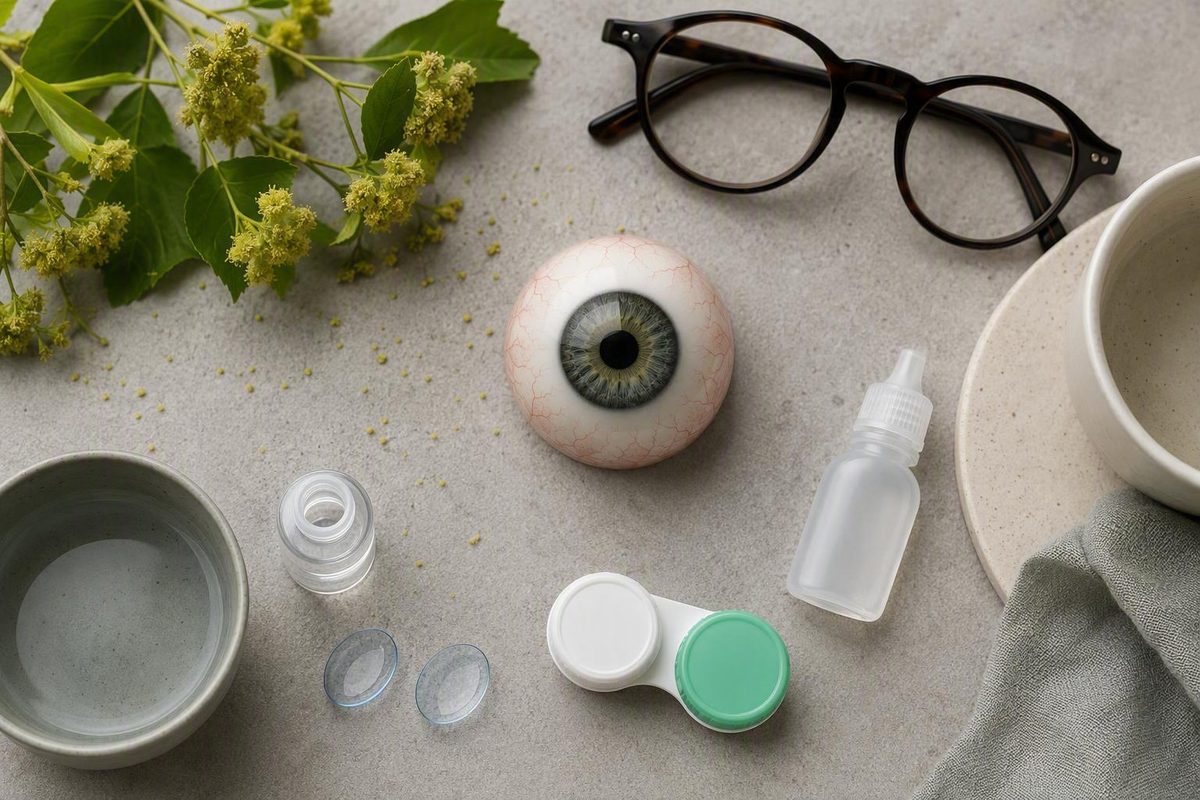
Yes. Allergic conjunctivitis usually affects both eyes, but one eye can be more symptomatic and, less commonly, may appear affected alone. Localized contact with an allergen is one possible explanation, but it does not confirm that allergy is the cause. Because strictly one-sided symptoms are less typical, consider infection, irritation, a foreign body, injury, dry eye, tear-drainage problems and contact-lens complications as well.
Seek prompt or same-day clinical assessment for eye pain, light sensitivity, blurred or reduced vision, intense redness or rapidly worsening symptoms. These are not symptoms to manage as a presumed allergy without professional advice.
Yes, one eye can react—but allergies usually affect both
Allergic conjunctivitis is inflammation of the conjunctiva—the thin tissue lining the eyelids and covering the white of the eye—caused by an immune response to an allergen. Common triggers include pollen, dust, mold and pet dander.
The usual pattern is itching, watering, redness or mild swelling in both eyes. One eye can nevertheless be much more uncomfortable than the other. Allergic causes are included among the possible explanations for unilateral conjunctivitis, but the available guidance does not establish how frequently true one-eye allergic conjunctivitis occurs. It should not be described as common.
Localized exposure is one plausible explanation. For example, touching or rubbing one eye after handling something carrying pollen or pet dander could produce a stronger reaction on that side. Eye makeup, facial products or another substance applied unevenly may also matter. This history can provide a clue, but it cannot prove that the reaction is allergic.
Prominent itching, clear or stringy discharge and accompanying sneezing or an itchy or runny nose make allergy more plausible. Even then, symptoms overlap with infection, dry eye, irritation, a scratch and foreign material. Allergic conjunctivitis usually affects both eyes and can be difficult to distinguish from other causes without an examination.
Contact-lens warning
If you wear contact lenses and develop redness or irritation, remove the lenses immediately. Do not reinsert them until an eye-care professional says it is safe.
Seek prompt eye care for worsening pain, light sensitivity, sudden blurry vision, unusual watering or discharge. These symptoms can occur with corneal complications that initially resemble ordinary irritation.
Eye pain, light sensitivity, blurred vision and intense redness warrant professional evaluation rather than allergy self-treatment, according to the CDC’s conjunctivitis guidance.
Allergy clues versus other causes of one-eye irritation
“One-sided” is a description, not a diagnosis. Consider the dominant symptom, how suddenly the problem began, whether it is spreading, possible exposures, contact-lens use and any effect on vision.
| Possible cause | Typical clues and one-eye pattern | Contagiousness | Appropriate next step |
|---|---|---|---|
| Allergic conjunctivitis | Intense itching, watering, mild swelling and clear or stringy discharge; sneezing or an itchy or runny nose adds context. Usually affects both eyes, although one may be worse or appear affected alone. | Not contagious | Mild symptoms without warning signs may be monitored with temporary comfort measures. Arrange an examination if the one-eye pattern persists, recurs or has no clear explanation. |
| Viral conjunctivitis | Watery discharge, burning or grittiness; may accompany a cold or respiratory illness. Often begins in one eye and later spreads to the other. | Can be contagious | Use careful hygiene. Seek care for worsening symptoms, warning signs or uncertainty about the cause. |
| Bacterial conjunctivitis | Thick or pus-like discharge, crusting or eyelids stuck together. It may affect one eye, both eyes or one followed by the other. Discharge color alone cannot confirm the diagnosis. | Can be contagious | Heavy discharge or worsening symptoms merits prompt assessment. Do not use leftover antibiotic drops. |
| Ordinary irritant, foreign body or scratch | Sudden tearing, grittiness or a feeling that something is trapped in the eye after dust, cosmetics or an injury. A retained object or scratch may affect only one eye. | Not generally contagious | Avoid rubbing. Seek assessment for pain, injury or a persistent foreign-body sensation. |
| Dry eye or tear-drainage problem | Burning, grittiness, fluctuating comfort or excessive watering. One eye may feel drier or water more, but symptoms cannot reliably identify the mechanism. | Not contagious | Arrange an examination if the pattern persists, recurs or remains unexplained. |
| Contact-lens complication | Redness, pain, light sensitivity, sudden blur, unusual watering or discharge. It may affect one eye and resemble ordinary irritation. | Depends on the cause | Remove the lens, do not reinsert it and obtain prompt eye care so corneal disease can be excluded. |
These patterns are clues, not diagnostic tests. Itching does not prove allergy, colored discharge does not prove bacterial infection, and symptoms remaining in one eye do not automatically mean infection. An eye examination may be needed to inspect the cornea, eyelids and conjunctiva.
A potentially harmful chemical splash is different from mild irritation caused by a cosmetic or facial product. Do not delay first aid while trying to decide whether allergy is also present.
What to do now if symptoms are mild
Short-term self-care is reasonable only when symptoms are limited to mild itching or watering and there is no pain, light sensitivity, vision change, intense redness, significant injury, heavy discharge or worsening.
For temporary comfort:
- Stop rubbing the eye.
- Move away from the suspected trigger.
- Stop using a cosmetic, facial product or eye product that may be contributing.
- Apply a clean, cool compress over the closed eyelid.
- Consider preservative-free artificial tears for temporary lubrication.
- Avoid sharing eye makeup while the cause remains uncertain.
If infection is possible, wash your hands frequently and avoid sharing towels, pillows or eye makeup. Viral and bacterial conjunctivitis may spread, whereas allergic conjunctivitis is not contagious. The National Eye Institute recommends handwashing and not sharing personal items when pink eye may be involved and lists cold compresses and nonprescription eye drops among possible comfort measures for mild symptoms (NEI).
Ask an eye-care professional or pharmacist which product, if any, is suitable rather than selecting one solely from the symptom pattern.
Do not use leftover antibiotic drops. Antibiotics do not treat allergic or viral conjunctivitis, and an old prescription may be inappropriate for the current problem. Corticosteroid eye drops should not be tried without an eye-care clinician’s supervision. The American Academy of Ophthalmology advises against indiscriminate topical antibiotic or corticosteroid treatment for conjunctivitis.
These steps may make a mildly irritated eye more comfortable, but they cannot establish or necessarily resolve the underlying cause.
Contact lenses make a red eye more urgent
Contact-lens wear raises the risk of keratitis, which is inflammation of the cornea. Microbial keratitis occurs when microorganisms infect the cornea, and severe cases can threaten vision. Because early symptoms can resemble routine irritation or conjunctivitis, a painful or worsening contact-lens-related red eye should not be managed as a presumed allergy.
If symptoms begin while you are wearing contacts:
- Remove the lenses immediately.
- Do not reinsert them until an eye-care professional advises that it is safe.
- Seek prompt eye care for worsening pain, light sensitivity, sudden blurry vision, unusual watering or discharge.
- Ask the clinician what to do with the lenses, case and any eye products involved rather than relying on generic cleaning or replacement instructions.
The CDC gives the same remove-and-call guidance to contact-lens wearers with redness, irritation, worsening pain, light sensitivity, sudden blur, unusual watering or discharge.
When one-eye symptoms need an examination
Use the following urgency levels rather than waiting a fixed number of days.
Same-day or prompt care
Arrange same-day or otherwise prompt professional assessment for:
- Eye pain
- Light sensitivity
- Blurred or reduced vision
- Intense redness
- Symptoms that are rapidly worsening
- Heavy or pus-like discharge
- A significant scratch or other eye injury
- A persistent sensation that something is trapped in the eye
- Concerning redness or irritation in a contact-lens wearer
Routine assessment soon
Book an eye examination when symptoms:
- Remain confined to one eye without a clear explanation
- Persist rather than settling
- Keep returning in the same eye
- Do not respond as expected to an appropriate treatment
- Seem connected to cosmetics, facial products, eye medicines or contact-lens products
- Produce repeated watering, discharge or irritation on one side
Persistent or recurrent unilateral conjunctivitis has a broad range of possible causes. These may include chronic infection, reactions to medicines or products, retained material beneath an eyelid, contact-lens effects, impaired tear drainage and inflammatory disease. Uncommon serious conditions can also mimic chronic conjunctivitis, but they are reasons to examine persistent or atypical symptoms—not likely explanations for every brief, mildly itchy eye.
An evaluation may review recent exposures, cosmetics and eye products, medications, injuries and contact-lens use. The clinician may examine the cornea, eyelid edges, area beneath the eyelid and tear-drainage system. The American Academy of Ophthalmology’s review of chronic unilateral conjunctivitis explains why persistent one-eye disease requires a broader assessment rather than repeated symptom-based treatment.
Short-term comfort measures
If symptoms are mild, limited to itching or watering and free of warning signs, use the temporary comfort measures described above while monitoring the eye or arranging professional advice. Move to prompt care if pain, light sensitivity, vision changes, intense redness, deterioration, injury or concerning contact-lens-related symptoms develop.
Allergies can affect one eye more strongly, but isolated symptoms are atypical and cannot be diagnosed by itching, discharge or laterality alone. Dry Eye Watch provides general educational information and cannot diagnose an individual eye problem or replace care from a qualified professional.