
How Long Can I Wear Contacts? What Sets the Limit
Three limits govern when to remove contacts: the recommended daily duration, symptoms or the replacement deadline, whichever comes first.
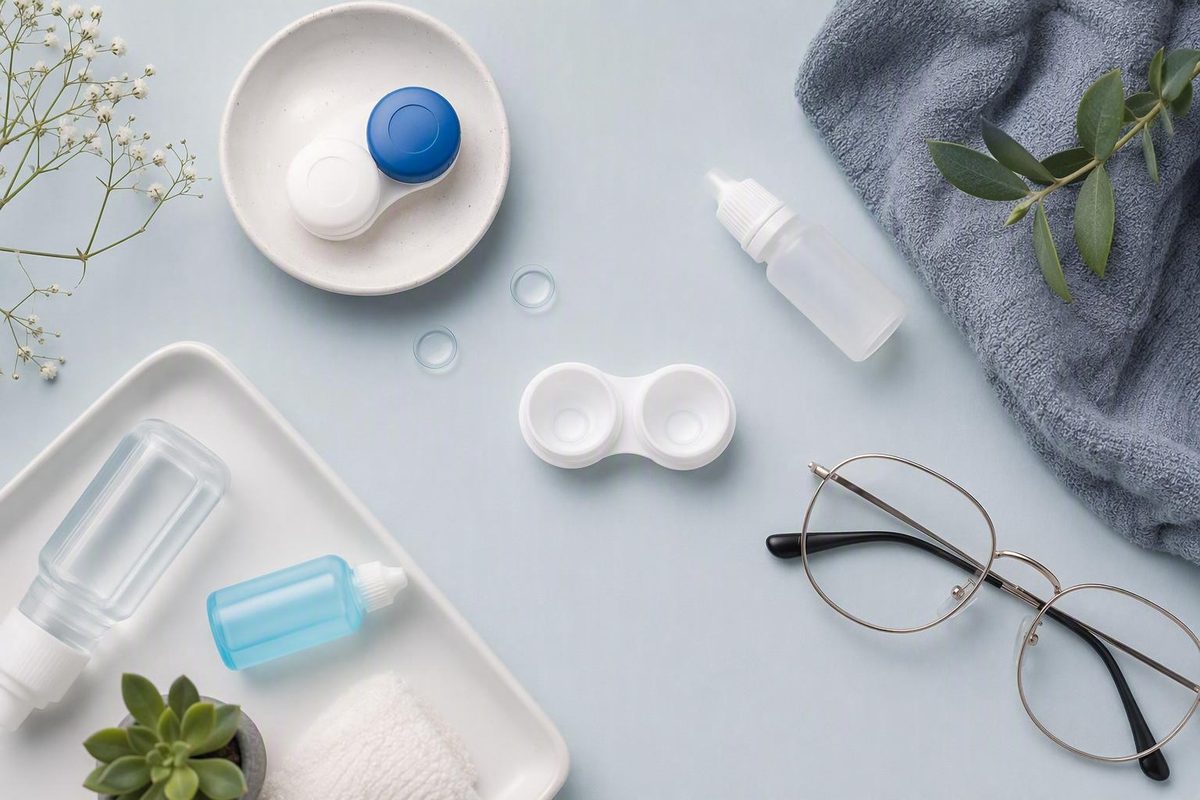
The short answer: often 8–12 hours, but your prescribed limit comes first
There is no universal number of hours that everyone can safely wear contact lenses. Some commercial eye-care guides use 8–12 hours as a practical daytime starting estimate, while others suggest that certain lenses and wearers may tolerate longer. Those figures are rules of thumb, not personalized clearance. The exact lens instructions, prescribed wearing schedule, fit, eye health, tear quality, environment, and your eye-care professional’s advice take priority. One commercial guide describes 8–12 hours as a general starting range while emphasizing individual variation.
Your contact-lens box may identify the lens as daily wear or extended wear and state its replacement frequency. It may not give you a patient-specific maximum number of daytime hours. Your clinician may therefore need to provide the practical daily schedule based on your eyes and how the lenses fit.
Your limit may depend on:
- The exact lens product and labeled wear mode
- Whether it is prescribed for daily or overnight wear
- The replacement schedule
- Lens fit and prescription
- Corneal and general eye health
- Tear quality, dry eye, or allergies
- Your work, activities, and environment
- Your clinician’s fitting instructions
- How your eyes and vision respond that day
Do not treat 12 or 16 hours as a target. If your contacts become dry, irritating, red, painful, or blurry after six or eight hours, remove them then. Symptoms are an earlier stop signal, not something to push through to reach a generalized number.
The reverse is equally important: comfort cannot extend the labeled or prescribed schedule. A lens can still feel acceptable after its daily limit or replacement deadline. Feeling fine does not prove that it remains appropriate to wear.
Quick answer
- Identify the exact lens and check its package instructions, prescribed wear mode, and replacement schedule.
- Follow the daily duration recommended by your eye-care professional; ask if no practical hourly recommendation was provided.
- Remove the lenses earlier if dryness, irritation, redness, pain, or changed vision develops.
- Remove ordinary daily-wear lenses before sleeping or napping.
- If you cannot confirm the schedule, switch to glasses rather than guessing.
The safest interpretation is not “wear them until they hurt.” Follow the product and prescribed schedule even when your eyes feel fine, and treat symptoms as a reason to stop sooner.
Use three clocks: today’s hours, your eyes’ response, and the replacement date
Terms such as daily, two-week, and monthly are easy to misread. They commonly describe how often a lens is replaced, not a guaranteed number of hours it may remain on the eye and not permission for continuous wear.
Use three separate clocks when deciding whether a lens should come out or be discarded.
Clock 1: Labeled wear mode and prescribed daily duration
The labeled wear mode establishes whether the product is intended for daily wear or is eligible for an approved form of extended wear. Your clinician then determines whether that mode is appropriate for you and may recommend a practical daily duration based on your eye health, fit, tear film, and tolerance.
If yours does not, ask the prescribing practice rather than deriving a limit from the words “daily,” “two-week,” or “monthly.”
“Daily wear” does not mean 24-hour wear. It generally means using lenses during waking hours and removing them before sleep. Overnight wear is a separate mode that requires an eligible lens and an appropriate prescription.
Clock 2: Your eyes’ response
This clock ends the day’s session when dryness, burning, grittiness, irritation, redness, or fluctuating vision makes earlier removal necessary.
Symptoms can shorten a prescribed schedule but cannot lengthen it. Feeling comfortable beyond the recommended duration is not permission to continue, just as an old reusable lens does not gain extra life because it still feels acceptable.
Comfort can also change from one day to the next. A duration that worked yesterday may be too long today during an allergy flare, extended screen session, or exposure to dry, windy, smoky, or dusty air.
Clock 3: The replacement deadline
The replacement clock determines when a lens must be discarded. For planned-replacement lenses, supplied eye-care guidance generally measures that interval from opening the sterile package rather than by adding up individual wear days. Exact product labeling remains controlling.
For example, a monthly lens opened on August 1 is generally due for replacement about 30 days later, even if it was worn only five times. A two-week lens is generally replaced 14 calendar days after opening rather than after 14 separate days of wear. Provider guidance distinguishes daily wearing duration from the total lifespan of a lens and explains that the replacement period begins when the package is opened.
The decision rule is straightforward:
- Recommended daily duration reached? Remove the lens.
- Symptoms begin earlier? Remove it earlier.
- Calendar replacement deadline reached? Discard it, subject to the exact product instructions.
- Lens damaged, contaminated, or persistently uncomfortable? Stop using it and obtain product-specific or professional advice.
Reaching one limit is enough. You do not wait for all three.
Wear and replacement guide by contact-lens type
This table summarizes common categories. It cannot replace the instructions for your exact product or the schedule prescribed after your fitting.
| Lens category | General daytime guidance | Replacement clock | Nightly care | Overnight eligibility |
|---|---|---|---|---|
| Daily disposable | Follow the recommended daytime duration; remove sooner for symptoms | One day of use, subject to exact labeling | Not intended for cleaning or storage for reuse | No for ordinary daily disposables |
| Two-week reusable | “Two-week” does not determine daily hours | Generally 14 calendar days after opening, subject to labeling | Usually remove, clean, disinfect, and store in fresh approved solution | Only if the exact product is approved and prescribed for it |
| Monthly reusable | “Monthly” does not mean continuous wear | Generally about 30 calendar days after opening, subject to labeling | Usually remove, clean, disinfect, and store nightly | Only if the exact product is approved and prescribed for it |
| Extended-wear | Follow the exact product and clinician schedule | Varies by product and prescription | Depends on the prescribed regimen | May be eligible, but overnight schedules are product- and patient-specific |
| Rigid gas-permeable, scleral, therapeutic, or specialty | Individualized | Individualized | Individualized | Do not assume; follow specialist instructions |
Daily disposables
Daily disposables are intended for single-use daytime wear. Insert a fresh lens, wear it within your recommended schedule, remove it before sleep, and discard it according to the product instructions.
The conservative rule in the supplied eye-care guidance is to discard a daily disposable after removal rather than clean, store, and reinsert it. Warby Parker’s educational guide likewise states that a daily lens removed during the day should be replaced with a fresh one. Check the labeling for your exact product if anything is unclear.
“Daily” does not guarantee a full waking day of comfortable wear. Symptoms or an individualized recommendation may require earlier removal.
Two-week lenses
Two-week lenses are reusable, but the name generally refers to their replacement cycle rather than their daily wearing duration. Supplied provider guidance describes a typical 14-calendar-day cycle after opening, with nightly removal, cleaning, and disinfection unless a different regimen applies to the exact product.
Do not count only the days on which you wore them. Record the opening date and follow the package instructions.
Monthly lenses
Monthly lenses are generally replaced about 30 calendar days after opening, subject to their exact labeling. “Monthly” does not mean that a lens can remain on the eye continuously for a month.
Most monthly products described in the supplied guidance are daily-wear lenses that must be removed for cleaning, disinfection, and storage each night. If lenses opened on August 1 were worn only on weekends, those unused weekdays do not ordinarily move the replacement deadline into September. An eye-care practice overview describes two-week and monthly replacement periods, nightly care, and individualized schedules.
Extended-wear lenses
“Extended wear” is a specific wear mode, not another name for any reusable, monthly, or silicone-hydrogel lens. Overnight schedules vary by exact product and prescription.
Do not apply another wearer’s six-night, seven-day, or longer schedule to your lenses. Even when a product is eligible for overnight use, your eye-care professional must determine whether that regimen is appropriate for your eyes.
Approval for overnight wear also does not make sleeping in lenses risk-free or authorize a longer schedule than the one prescribed.
What silicone hydrogel does—and does not—tell you
Supplied clinic guidance describes silicone hydrogel as generally transmitting more oxygen than traditional hydrogel. That material property does not by itself authorize overnight or unlimited wear.
A lens must have the appropriate labeled wear mode, and your clinician must prescribe that mode for you. “Silicone hydrogel,” “breathable,” “monthly,” and “reusable” are not substitutes for explicit overnight-wear instructions.
Specialty lenses
Rigid gas-permeable, scleral, therapeutic, custom, and other specialty lenses may have individualized adaptation, cleaning, removal, and replacement requirements.
Do not identify a lens by appearance. Check the box, blister pack, written prescription, or dispensing record. If you still cannot identify it, contact the prescribing practice before making assumptions about wear time or overnight use.
Why wearing contacts too long can become a problem
A contact lens sits over the cornea, the clear front surface of the eye. Supplied clinic guidance explains that contact lenses restrict oxygen flow to some degree and associates prolonged or improper wear with dryness, irritation, corneal swelling, and infection (London Vision Clinic).
Several separate issues can matter:
- Oxygen transmission. Lens material, design, thickness, fit, and wearing conditions affect how oxygen reaches the cornea. Prolonged wear—particularly during sleep—can increase concern about inadequate oxygen and corneal swelling.
- Drying and tear-film disruption. A lens changes how tears spread across the eye. As its surface becomes less evenly wetted, vision may fluctuate and the lens may feel gritty, tight, or irritating.
- Deposits and lens aging. Reusable lenses accumulate material during use. Cleaning and disinfection are required for reuse within the product’s schedule, but they do not extend its stated replacement interval.
- Contamination. Hands, storage cases, old solution, water, and repeated handling can introduce contaminants. Poor hygiene, water exposure, unapproved sleep, and late replacement are avoidable risk factors.
Supplied clinic sources associate excessive wear or poor care with discomfort, blurred vision, inflammation, corneal swelling, and infection. These outcomes do not follow from one universal hourly threshold; they are reasons to respect the product instructions, prescribed regimen, replacement date, and warning symptoms.
It does not prevent deposits, eliminate contamination, correct poor hygiene, make water exposure appropriate, or revive a lens after its replacement deadline.
That is why symptoms matter without being the only boundary. Pain, redness, or changed vision can tell you to stop early, but the absence of symptoms cannot cancel the prescribed schedule.
Why your comfortable wear time may change from one day to the next
Contact-lens tolerance is not a fixed personal number. It reflects the interaction among the lens, your eyes, your tear film, your activities, and the surrounding environment.
Factors identified in supplied eye-care guidance as potentially shortening comfortable wear include:
- Dry eye or a dry-eye flare
- Seasonal or environmental allergies
- Prolonged screen use
- Reduced or incomplete blinking
- Low humidity
- Wind
- Smoke or dust
- Indoor heating
- Air conditioning
- A long shift in a demanding environment
Screens can be particularly relevant because sustained concentration may reduce blinking. A less evenly wetted lens surface may then produce dryness or fluctuating vision later in the day. An optometry-practice guide lists dry eye, allergies, screen use, smoke, dust, and air conditioning among factors that can shorten tolerated wear.
Fit and prescription matter too. Tear quality, eyelid health, allergies, occupation, and environment help explain why two people using similar lenses may tolerate different schedules.
If dryness or fluctuating blur appears late in the day, remove the lenses rather than pushing toward a nominal hour target. Compatible rewetting drops may sometimes help comfort when recommended for you, but drops do not extend a replacement deadline or make excessive or overnight wear appropriate.
Carrying glasses gives you a practical alternative when comfort changes.
Repeatedly shortened wear deserves professional review. A clinician can assess lens fit, prescription, tear film, eyelids, material, care practices, and environmental factors. Do not respond by extending wear or changing brands without an appropriate fitting.
A note for new wearers
New wearers should follow the adaptation schedule supplied by their clinician. Commercial recommendations in the evidence vary from about four to eight hours for an initial session, which is precisely why no single first-day schedule should be presented as universal.
Start with the shorter sessions recommended during your fitting, remove the lenses if symptoms develop, and increase wear only as instructed. Tolerating a full day is not a test you need to pass.
Remove the lenses now if you notice these warning signs
Do not wait for a planned removal time when something feels wrong. Supplied clinic guidance advises prompt removal for symptoms including discomfort, burning, stinging, tearing, dryness, blurred vision, redness, irritation, a foreign-body sensation, or unusual discharge, with professional advice when symptoms persist after removal (Blaine Eye Clinic).
Stop wearing your contacts and remove them promptly if you develop:
- Eye pain
- Marked or worsening redness
- Light sensitivity
- Persistent blurred, hazy, or changed vision
- Unusual discharge
- Burning or stinging
- A pronounced gritty or foreign-body sensation
- Substantial or increasing irritation
- Significant tearing with discomfort
- A lens that appears torn, damaged, or displaced
Wash and dry your hands before attempting removal. Discard a daily disposable according to its instructions; seek product-specific or professional advice about a reusable lens associated with pain, marked redness, discharge, or visual change.
Mild late-day dryness is not equivalent to severe pain or sudden visual change, but persistent discomfort is still a reason to remove the lenses and use glasses. Pain, light sensitivity, unusual discharge, or changed vision raises greater concern and warrants prompt professional assessment.
If symptoms persist after removal, contact an eye-care professional promptly. Dry Eye Watch’s published policy identifies sudden vision change, eye pain, or light sensitivity as symptoms for same-day clinician attention; its Terms of Use also clarify that site content is general information rather than a diagnosis. If you cannot reach your usual provider, use an appropriate urgent eye-care or medical service.
This article cannot determine whether a symptom is harmless and should not delay clinical assessment.
Sleep, naps, water, and other situations that change the answer
Sleep and water exposure can override the ordinary hour calculation. They matter even when the lenses have been worn for only a short time.
Sleeping and napping
Remove ordinary daily-wear contacts before both sleep and naps. A nap is still sleep with the eyelids closed over the lenses.
Only sleep in contacts when the exact product is approved for overnight wear and your eye-care professional has prescribed a specific overnight schedule. Do not infer permission from terms such as “monthly,” “reusable,” “breathable,” or “silicone hydrogel.”
Even approved overnight wear carries additional risk and must not be extended beyond the prescribed regimen because the lenses feel comfortable.
If you accidentally sleep in contacts
There is no complete universal home protocol in the supplied evidence for every lens, wearer, and set of symptoms. A commercial lens guide offers the conservative advice to remove the lenses, avoid contact-lens wear for the rest of the day, and contact an eye doctor for significant pain, redness, or vision changes after accidental sleep (Lensmart).
Follow the instructions supplied for your lens or seek professional advice if you cannot remove it comfortably.
Seek prompt professional advice for significant redness, pain, light sensitivity, discharge, or changed vision.
Showers, pools, hot tubs, and tap water
Keep contact lenses and storage cases away from tap water. Supplied optometry guidance identifies showering, swimming, rinsing lenses in water, and poor case or solution practices as contamination risks and recommends fresh contact-lens solution rather than topping off old solution (Blink Optometry).
The supplied evidence does not establish one complete disposal, disinfection, or safe-resumption protocol for every type of water exposure and every reusable lens.
Obtain prompt advice if pain, redness, light sensitivity, discharge, or visual change develops.
Damage, dirt, and persistent discomfort
A replacement date is an outer limit, not a guarantee that every reusable lens will remain suitable until that date. A lens that is torn, damaged, visibly dirty, contaminated, or persistently uncomfortable may need to be discarded early.
Cleaning cannot convert a daily disposable into a reusable lens. Rewetting drops, cleaning, or a short glasses break also cannot authorize excessive wear or an unapproved overnight schedule.
Build a personal wear plan without guessing
A reliable plan starts with the exact lens rather than a generic internet maximum.
1. Identify the lens
Record or photograph:
- Brand and full product name
- Prescription parameters
- Lens category
- Labeled daily-wear or extended-wear mode
- Replacement frequency
- Which lens belongs to each eye
Do not identify a lens by appearance.
2. Read the package instructions
Look separately for:
- Wear mode: daily wear or an approved form of extended wear
- Replacement frequency: one day, 14 days, about 30 days, or another interval
- Care requirements: cleaning, disinfection, storage, and compatible solutions
If overnight eligibility is absent or unclear, remove the lenses before sleep until the prescribing clinician confirms otherwise.
3. Confirm your practical daily schedule
Because packaging may not provide a patient-specific hourly maximum, ask your eye-care professional:
- How long should I normally wear this lens during the day?
- Should I build up wear gradually?
- Is this exact lens prescribed for naps or overnight use?
- What should I do when dryness or blur begins?
- Which drops, if any, are compatible with it?
Do not adopt another wearer’s schedule, even if the brand appears similar.
4. Track opening and replacement dates
For reusable lenses, record the date each sterile package is opened. Set a phone or calendar reminder based on the exact replacement instructions rather than counting only days worn.
A simple record might include:
- Opened: August 1
- Replace: date calculated from the labeled cycle
- Right and left lenses identified
- Case-care reminder recorded separately
5. Track symptoms, not just hours
For a week or two, note:
- Insertion and removal times
- When dryness, blur, burning, or grittiness begins
- Screen time
- Allergy symptoms
- Environmental conditions
- Whether symptoms improve after removal
6. Care for reusable lenses correctly
Unless your exact prescribed regimen says otherwise:
- Wash your hands before insertion and removal.
-
Dry them with a clean, low-lint towel.
-
Use fresh approved contact-lens solution each time.
- Never substitute tap water or saliva.
- Never top off old solution.
- Empty and care for the case according to its instructions.
- Replace the case according to product or professional guidance.
Nightly care does not restart or extend the replacement clock. It supports reuse only within the product’s stated cycle.
7. Prepare to remove lenses away from home
Carry backup glasses. Reusable-lens wearers may also want a clean case and properly packaged fresh approved solution.
8. Arrange a review when the plan stops working
Ask for an eye-care review when:
- Comfortable wear repeatedly falls well short of the recommended schedule
- Redness, burning, grittiness, or blur keeps returning
- One eye consistently tolerates its lens less well
- Lenses frequently feel stuck or move poorly
- You are considering overnight wear
- Your work or environment has changed
- You want to change brand, material, or replacement frequency
- You are unsure whether a symptom is routine dryness
The hierarchy is:
- Exact product labeling and prescribed instructions
- Symptoms as an earlier stop signal
- Generalized hour ranges
Return to the three clocks whenever you are unsure. Remove contacts when the recommended daily duration is reached, when symptoms begin, or when the replacement deadline arrives—whichever comes first. Switch to glasses rather than pushing through discomfort, and seek prompt care when symptoms persist.
Can I wear contacts for 16 hours if they still feel comfortable?
Not necessarily. Some commercial sources say certain people and lenses may tolerate as long as 16 hours, but that is a generalized estimate rather than permission for you to do so.
Follow the recommended duration for your exact lens and fitting. Comfort cannot extend that schedule or a replacement deadline. Remove the lenses sooner if dryness, redness, irritation, pain, or blur develops.
Do monthly contacts last for 30 wear days or 30 calendar days after opening?
Generally, supplied eye-care guidance describes monthly lenses as lasting about 30 calendar days after opening, subject to the exact product labeling—not 30 separate wear days.
A lens opened on August 1 would therefore generally be due for replacement about 30 days later even if it was worn only five times. Most monthly lenses also require nightly removal, cleaning, disinfection, and storage.
Can I reuse a daily disposable if I wore it for only a few hours?
Generally, no. If your exact product is labeled as a daily disposable, the conservative guidance is to discard it after removal rather than clean and store it for reuse. An optometry-practice article gives the same discard-after-removal guidance for daily disposables.
Because instructions are product-specific, check the packaging and ask the prescribing practice if anything is unclear. Carry glasses or an unopened replacement lens if you expect to remove your contacts during the day.
Can I nap in contacts if I am not sleeping overnight?
Not in ordinary daily-wear contacts. Remove them before a nap as well as before overnight sleep.
The exception is an exact lens approved for overnight wear and prescribed under a schedule that permits sleep. “Monthly” or “silicone hydrogel” alone does not establish that eligibility, and approved overnight wear is not risk-free.
When can I wear contacts again after redness, pain, or blurred vision?
There is no fixed waiting period that is appropriate for every cause. Remove the lenses and do not assume that temporary improvement makes immediate reinsertion safe.
Persistent redness or blur warrants prompt professional advice. Eye pain, light sensitivity, or sudden vision change should receive same-day clinician attention under Dry Eye Watch’s published policy.