
What Is a Refraction Eye Test? What to Expect
It measures how your eyes focus light and compares lens powers to determine whether you need corrective lenses and which powers provide the clearest vision.
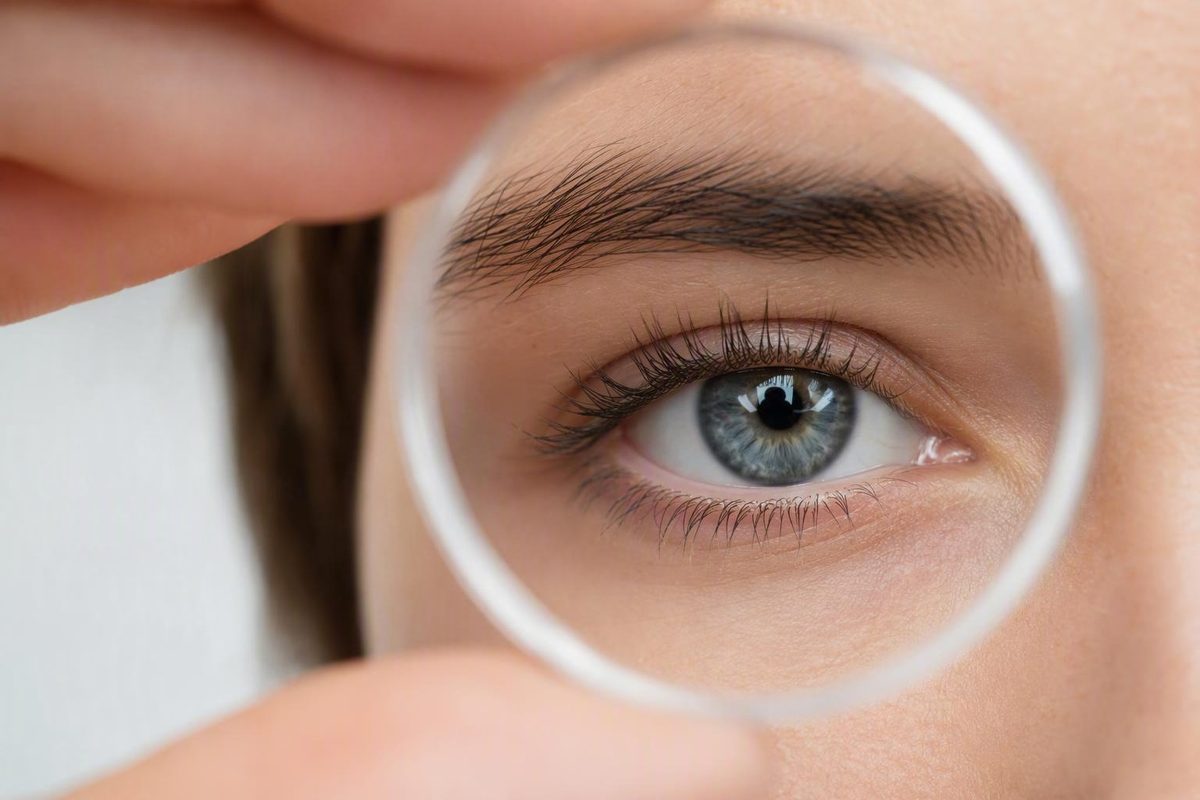
A refraction eye test is the prescription-checking part of an eye examination. It measures how your eyes focus light and compares lens powers to determine whether you need corrective lenses and which powers provide the clearest vision. The result can be used to issue or update an eyeglass prescription and can help determine contact-lens correction. Refraction is generally simple and painless, but it is not a complete evaluation of eye health. (Warby Parker)
A refraction eye test measures the prescription you need
Light normally passes through the cornea and natural lens, which bend it toward the retina—the light-sensitive tissue at the back of the eye. A refractive error occurs when the eye’s shape or focusing system prevents light from focusing correctly on the retina. Eyeball length, corneal shape and age-related changes in the lens can all affect this focus.
During refraction, the clinician tests optical corrections to find the lens-power combination that produces your clearest vision. The resulting prescription may include different types of correction for nearsightedness, farsightedness or uneven focusing.
Refraction does not explain every case of blurred vision. It answers a narrower question: how much can your vision be improved by changing lens power? Other parts of an eye examination are needed to evaluate the health of the eye and investigate symptoms that optical correction does not resolve.
What happens during the test
The equipment and exact order can vary, but a routine refraction commonly includes the following steps:
- You read an eye chart. You identify letters or symbols at a set viewing distance so the examiner can measure how clearly you currently see.
- Each eye is tested separately. One eye is covered or blocked while the other is assessed, and then the process is repeated.
- The clinician may obtain an objective estimate. An autorefractor produces a computerized starting measurement. Alternatively, the clinician may use a retinoscope to assess reflected light. These methods do not require you to choose between lenses.
- You look through a phoropter. This is the large device positioned in front of your face. It holds different test lenses and allows the examiner to change their powers.
- You compare lens choices. When asked, “Which is clearer, one or two?” select the option that looks sharper. If they look the same, say so. Your answers help refine the final prescription.
The American Academy of Ophthalmology distinguishes objective refraction from subjective, or manifest, refraction. Objective methods measure focusing without relying on your choices, while subjective refraction uses your responses as lenses are changed through a phoropter. (American Academy of Ophthalmology)
The National Eye Institute describes the assessment of refractive errors during an eye examination as simple and painless. Refraction may take place within a longer appointment that includes separate vision and eye-health checks. (National Eye Institute)
Which focusing problems refraction can identify
Refraction can identify and measure four common focusing problems:
| Refractive error | Plain-language meaning | Common vision pattern |
|---|---|---|
| Myopia | Nearsightedness | Distant objects commonly look blurry |
| Hyperopia | Farsightedness | Nearby objects can be difficult to focus on |
| Astigmatism | Light does not focus evenly | Near and distant vision may look blurry or distorted |
| Presbyopia | Age-related loss of near focus | Reading and other close work become harder |
Blur is the most common symptom of refractive error. Other possible symptoms include headaches, squinting, glare or halos, eye strain, and difficulty focusing while reading or using a computer. The National Eye Institute lists the four common refractive errors and their associated vision patterns and symptoms.
A prescription check can establish whether different lenses improve your vision. The broader examination can then address other possible explanations for blur, strain or focusing difficulty.
Refraction is not the same as a complete eye exam
Refraction is one component of an eye appointment, not another name for the entire examination.
| Test or process | What it does | What it does not establish by itself |
|---|---|---|
| Visual-acuity test | Measures how clearly each eye sees at specified distances | The lens powers needed for your clearest corrected vision |
| Refraction | Tests how much clarity can be improved with different lens powers | The health of the retina, optic nerve or every other eye structure |
| Dilation | Widens the pupils so internal eye structures can be examined more fully | Your corrective-lens prescription |
| Comprehensive eye exam | Combines relevant vision and eye-health assessments | An identical set of tests for every patient |
Visual-acuity testing measures how well each eye can see. Refraction asks how much that vision can be improved with corrective lenses. A comprehensive examination may also assess the pupils, peripheral vision, eye movements, eye pressure, front of the eye, retina and optic nerve. (American Academy of Ophthalmology)
Dilating drops may be used during the broader examination, but dilation is not the same as routine refraction. A related procedure called cycloplegic refraction uses drops that temporarily stop accommodation—the eye’s ability to adjust focus. This allows the clinician to measure focusing without that adjustment, but cycloplegic drops are not required for every routine refraction. (American Academy of Ophthalmology)
If changing lens powers does not produce the expected clarity, simply making the prescription stronger may not solve the problem.
How to prepare—and when blur needs more urgent attention
Preparation is usually straightforward:
- Ask about contact lenses. If you wear them, contact the examining office to ask whether you should remove them before the test and, if so, for how long. Instructions may depend on your lenses and the purpose of the appointment. (UCSF Benioff Children’s Hospitals)
- Bring your current correction. Your existing glasses or contact lenses can provide a useful reference, although individual offices may have different requests. (Pearle Vision)
- Describe what you notice. Tell the clinician if blur, strain or focusing difficulty persists while you wear your current prescription. Explain whether the problem is constant or occurs during particular activities.
- Ask about billing in advance. Refraction may be billed separately from other parts of an eye exam, and insurance treatment varies by provider and plan. Ask the office what it charges and check your benefits with your insurer.
Do not treat a sudden vision change, eye pain or light sensitivity as a routine prescription problem. Dry Eye Watch’s published safety guidance advises seeking same-day clinician attention for these symptoms. This article provides general information, not a diagnosis or individualized clinical advice.
Frequently asked questions
Can a refraction be done without asking me to choose between lenses?
Yes. An objective refraction can estimate focusing error without requiring you to compare lens choices. An autorefractor supplies a computerized measurement, while a retinoscope lets the clinician assess reflected light.
When you can respond reliably, the clinician may then use subjective lens comparisons to refine that starting estimate. During this stage, “the same” is a valid answer if neither option looks clearer.
Will refraction be included in my eye-exam fee?
Not necessarily. Refraction may be itemized and billed separately, and coverage depends on the office, insurer, plan and reason for the visit. Do not assume that either medical or vision insurance will pay for it. Ask the eye-care office for your expected charge and verify applicable benefits directly with your insurer.
Does an eyeglass refraction provide a complete contact-lens prescription?
Not by itself. Refraction supplies information about the lens powers that improve your vision and can contribute to contact-lens correction. It should not be assumed to represent every service or measurement involved in prescribing contacts. Ask the office what additional contact-lens measurements or fitting steps, if any, are included in your appointment.
Refraction is the lens-comparison test used to find a clearer prescription; a comprehensive eye exam evaluates much more than focusing power. Before your visit, ask about contact-lens preparation, separate refraction charges and insurance benefits—and seek same-day professional attention rather than waiting for a routine prescription check if you develop a sudden vision change, eye pain or light sensitivity.