
Coloured Contact Lenses for Dry Eyes: Are They Suitable?
Coloured contacts may suit some people with dry eyes. Learn what to check at a fitting, how daily and monthly options differ, and when to avoid wear.
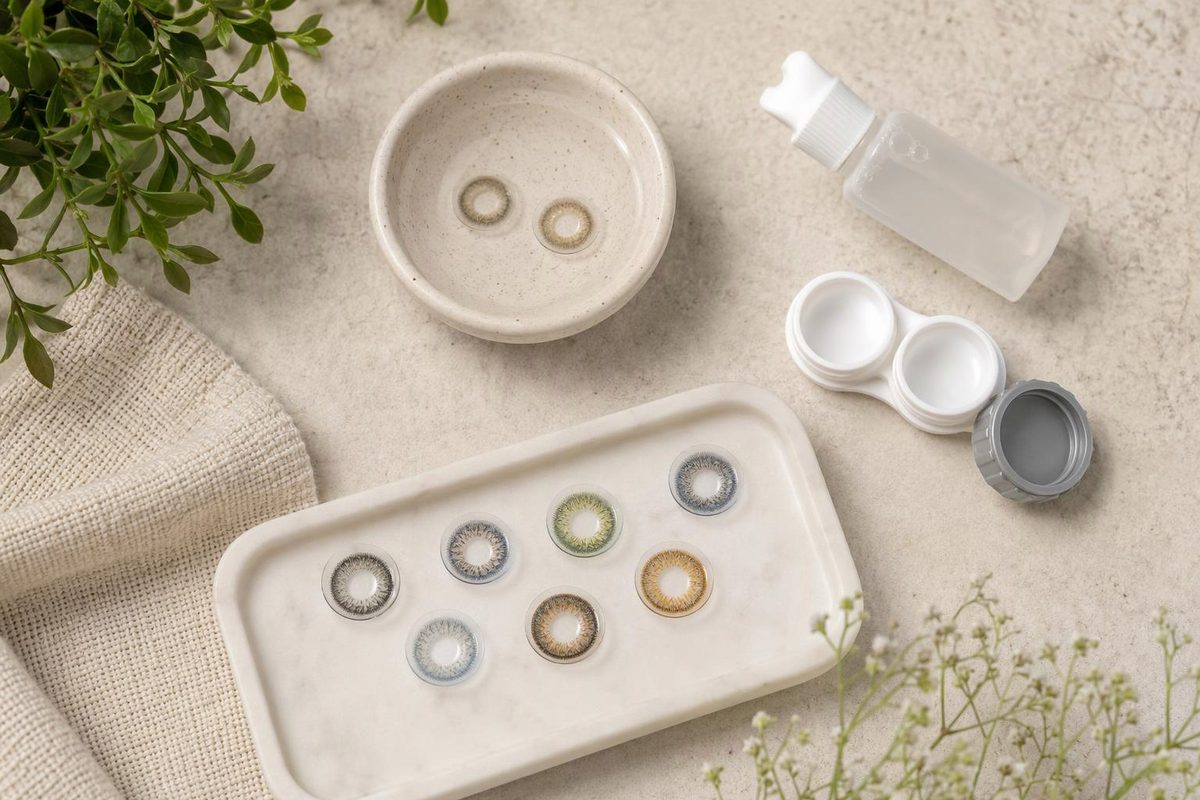
Coloured contact lenses may be an option for some people with dry eyes, but suitability needs an eye examination and a fitting for the specific lens. A colour-changing lens is not a dry-eye treatment, and a cosmetic pair is not a workaround for discomfort with your usual contacts.
For example, the AIR OPTIX COLORS patient instruction booklet says not to wear the lenses when excessive dryness makes contact-lens wear uncomfortable, or when the eyes are red or irritated. If that describes your eyes, address the dryness with your eye-care professional before trying coloured lenses.
Start with suitability, not the shade
Tell your optometrist or ophthalmologist whether your eyes feel dry without lenses, how your current contacts feel, and when discomfort begins. A dry-eye assessment can examine tear production, tear quality and the condition of the eye’s surface; treatment depends on the cause, as Mayo Clinic explains.
Then ask for a fitting of the exact coloured lens you want to wear. A comfortable clear lens does not establish that a different coloured product will fit appropriately. The FDA’s decorative-lens guidance emphasises that fit matters and that a contact-lens prescription includes the brand and lens measurements.
In the United States, coloured lenses require a prescription even when they have no vision-correcting power. “Plano” means no corrective power—not prescription-free. Buy from a supplier that requires a valid prescription and sells FDA-cleared or approved lenses, as the FDA advises.
Which coloured options are worth discussing?
Two examples illustrate the main choice between single-use and reusable coloured lenses. These are options to discuss at a fitting, not a ranking of lenses for dry eye. Details below reflect Alcon’s US product information checked on 5 November 2026.
| Lens | Replacement and care | What matters for your decision |
|---|---|---|
| DAILIES COLORS | Daily disposable, single use; discard after use rather than cleaning and storing; no sleeping in them | May be practical for occasional cosmetic wear because each use starts with a fresh pair. That convenience does not establish dry-eye suitability. |
| AIR OPTIX COLORS | Monthly replacement; remove, clean and disinfect after wear; do not sleep in them | A silicone hydrogel option, but its breathability is not a guarantee of comfort. Alcon lists discomfort, mild burning and stinging as possible side effects. |
Neither of these products is available with astigmatism correction. If you need that correction, ask whether a coloured option can meet your visual needs rather than choosing a cosmetic lens that leaves your vision inadequately corrected.
Do not equate “more breathable” with “best for dry eyes.” Silicone hydrogel lets more oxygen through than conventional hydrogel, but a 2023 Cochrane review found insufficient evidence to recommend one material over the other for comfort and safety. The evidence was of very low certainty. That review concerns soft lenses generally; it does not establish a winning coloured lens for people with dry eye.
Make the fitting answer these questions
Before buying a supply, ask:
- Is my eye surface suitable for this coloured lens now, or should we manage the dryness first?
- Can I try this exact product and have its fit and vision checked?
- What wearing time and replacement schedule should I follow?
- Which drops, if any, are appropriate while wearing it?
Do not assume your usual dry-eye drops can be used with lenses in place. The AIR OPTIX COLORS booklet advises using eye drops only as directed by your eye-care professional, including any lens-rewetting drops used during wear.
A virtual colour preview can help you choose a look; it cannot assess lens fit or eye comfort. If you cannot comfortably wear a fitted coloured lens, leave it out rather than trying to push through the discomfort. For the broader choice of clear and other lens types, see choosing contacts for dry eyes.
When to remove them and get help
Keep water away from the lenses and carry glasses if you need vision correction, as the CDC’s contact-lens tips recommend. Never share coloured lenses: they are fitted for your eyes, not someone else’s.
Remove the lenses immediately and contact your eye-care professional if you develop discomfort, redness or blurred vision. Pain, light sensitivity, sudden or reduced vision, discharge, or a red eye need urgent, same-day eye-care attention. Keep the lenses out while seeking advice; do not assume these symptoms are simply dryness. The patient booklet and FDA guidance warn that serious contact-lens problems can progress quickly.