
Preservative-Free Eye Drops for Dry Eyes: How to Choose
Learn when preservative-free artificial tears may help, how to choose vials or bottles, and what to check for contact lenses and safe use.
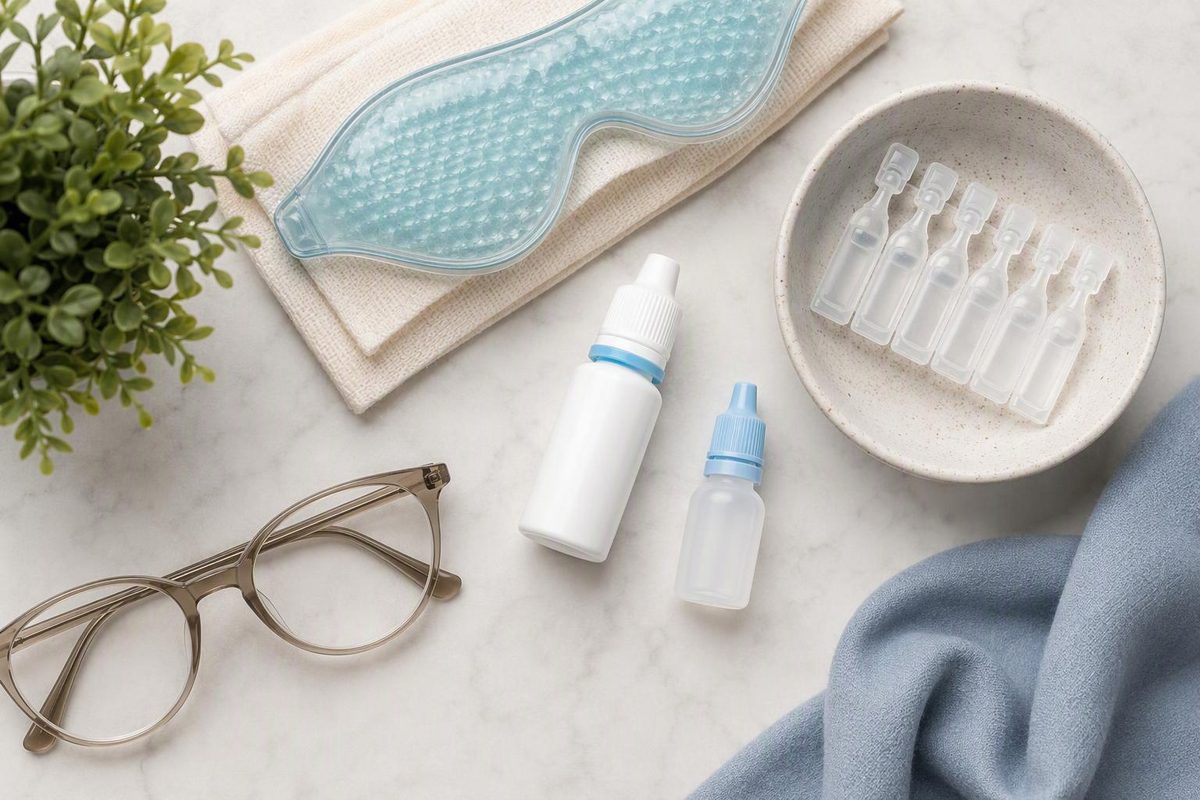
Preservative-free artificial tears are generally recommended if you need lubricating drops more than four times a day, or have moderate to severe dry eyes. For occasional mild dryness, a preserved artificial tear may be reasonable. No single brand works best for everyone. Mayo Clinic
When preservative-free drops may help
Preservatives discourage bacterial growth after a bottle is opened. That is useful, but they can also irritate the eye’s surface, especially with frequent use or more significant dryness. Choosing a preservative-free version avoids that exposure—it does not guarantee that every ingredient will agree with your eyes. Mayo Clinic
The “more than four times daily” advice is a product-selection guide, not a reason to keep increasing drops without an examination. The American Academy of Ophthalmology (AAO) advises an eye examination if you rely on over-the-counter lubricants more than two or three times a day. Artificial tears provide temporary symptom relief; they may not treat the underlying problem. AAO guidance
After cataract surgery, LASIK or another eye procedure, ask your surgical team which lubricant to use. AAO favors preservative-free drops during recovery, but your postoperative plan should guide the choice. AAO postoperative guidance
What to check on the label
Start with these distinctions rather than a “best drops” ranking:
- Purpose: Look for “artificial tears” or “lubricant eye drops” for temporary dry-eye relief. Redness-relief drops containing tetrahydrozoline or naphazoline are not a substitute; AAO warns that they can worsen symptoms and redness over time.
- Preservative status: Look for an explicit “preservative-free” statement on the exact product. A bottle can be preservative-free, so packaging alone does not tell you.
- Thickness: Liquid drops generally suit daytime tasks. Gels and ointments may last longer but cause more temporary blur, making them more suitable for evening or bedtime use.
- Formula: If an examination identifies tears that evaporate too quickly, an oil-containing lubricant may help. Preservative-free describes preservation, not which dry-eye problem the formula targets. AAO selection guidance
“Preservative-free” also does not mean “only water” or “no other ingredients.” For example, the U.S. Drug Facts for Systane Ultra Preservative-Free list polyethylene glycol 400 and propylene glycol as lubricants, plus several inactive ingredients. The label warns against use if you are sensitive to any ingredient. This is a label example, not a claim that it is better than another tear. Manufacturer Drug Facts
For a broader comparison, see our guide to liquid drops, gels and ointments for dry eyes.
Single-use vials or a multidose bottle?
Both formats can contain preservative-free tears. AAO describes purpose-built multidose bottles that protect against contamination without preservatives; single-use vials offer another packaging option. AAO packaging guidance
| Format | Practical advantage | What to remember |
|---|---|---|
| Single-use vials | Easy to keep individual doses in different locations | Discard after use as directed, even if liquid remains |
| Preservative-free multidose bottle | Less packaging waste and convenient for repeated use | Follow that bottle’s opening, storage and discard instructions |
Do not save a single-use vial by recapping it. For example, Alcon says its Systane Ultra PF vials must be discarded after each use because contamination risk increases after opening. Manufacturer instructions
Contacts and safe use
Preservative-free does not automatically mean safe to apply over contact lenses. Choose a product explicitly labeled for use while wearing lenses. Otherwise, remove them and follow the product’s reinsertion instructions. AAO contact-lens guidance
Wash your hands before using drops. Keep the tip away from your eye, fingers, clothing and other surfaces; replace a multidose bottle’s cap as directed. Preservative-free drops still need to be sterile. Check expiration and package instructions, and do not use a recalled product. FDA eye-drop safety advice
If symptoms persist despite lubricants, arrange an eye examination rather than repeatedly switching brands. Sudden vision changes, eye pain or light sensitivity need same-day eye care. New discharge or marked redness also warrants contacting an eye clinician right away. AAO warning signs Stop a drop that causes new or worsening symptoms and seek medical advice. FDA guidance
This information supports product selection; it is not a diagnosis or an individual treatment plan.