
Can Allergies Cause Dry Eyes? Symptoms, Relief, and Red Flags
Yes—eye allergies can cause or worsen dry-eye symptoms. Allergic inflammation can irritate the eye’s surface and make the tear film less stable, leaving the…
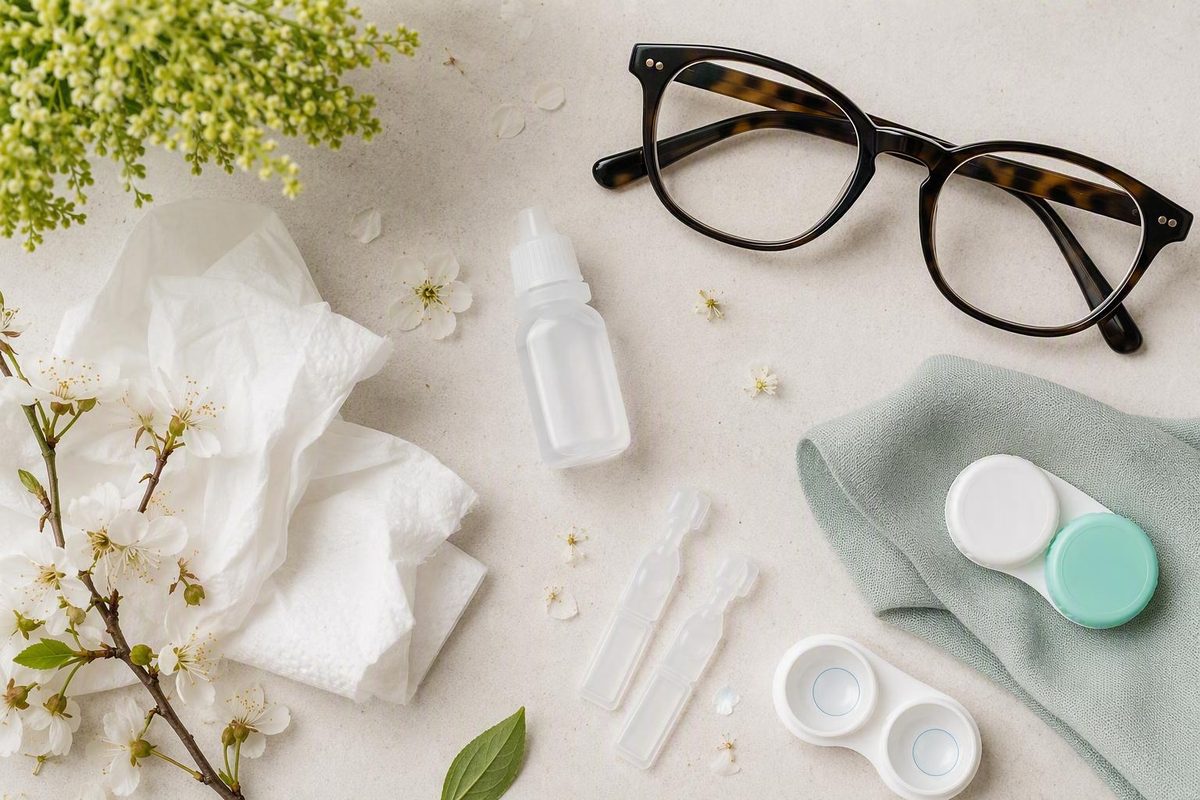
The short answer: allergies can make eyes dry
Yes—eye allergies can cause or worsen dry-eye symptoms. Allergic inflammation can irritate the eye’s surface and make the tear film less stable, leaving the eyes itchy, burning, gritty, watery, or intermittently blurry. However, a temporary allergy flare does not automatically mean you have chronic dry-eye disease.
Eye allergies and dry eye are distinct conditions, and you can have either one or both:
- Eye allergies, also called allergic conjunctivitis, occur when the immune system reacts to a substance such as pollen, pet dander, dust mites, or mold. Histamine and other chemicals released during that response cause itching and inflammation.
- Dry eye occurs when the eyes do not make enough tears, tears evaporate too quickly, or the tears do not remain stable enough to protect and lubricate the surface. The tear film depends on a functional balance of oil, water, and mucus. Mayo Clinic describes inadequate tear production, excessive evaporation, and tear-film instability as causes of dry eye.
It also helps to separate allergens from irritants. Pollen, dust mites, mold, and pet dander can provoke an immune response in someone who is allergic to them. Smoke, perfume, diesel exhaust, wind, and pollutants may cause or intensify symptoms through irritation even when they are not acting as allergens. The American College of Allergy, Asthma & Immunology identifies both indoor and outdoor allergens, along with nonallergic irritants, as potential eye-symptom triggers.
Allergies are only one possible contributor. Prolonged screen use, contact lenses, medications, aging, hormonal changes, low humidity, eyelid inflammation, problems with the eyelid oil glands, and systemic health conditions can also affect tear production or stability. That is why “my eyes feel dry during pollen season” is useful context but not a complete diagnosis.
A practical way to think about the relationship is:
- An allergy flare can temporarily make otherwise comfortable eyes feel dry.
- Allergies can aggravate tear-film problems that were already present.
- Medicines used for allergy symptoms can sometimes add to the dryness.
- A separate condition may be responsible even if symptoms happen during allergy season.
It is more useful to focus on your symptom pattern, exposures, treatments, and response to conservative measures than to assume one diagnosis.
How an allergy flare can disrupt the tear film
The front of the eye is covered by a thin protective tear film. Although it looks like simple moisture, it is a working mixture of oily material, watery fluid, and mucus. Together, these components help tears spread across the eye, slow evaporation, lubricate the surface, and support clear vision.
When an allergen reaches the eye of a sensitized person, the immune system responds. Mast cells release histamine and other chemicals, producing itching, redness, watering, swelling, and surface irritation. The ACAAI explains this immune response and the role of histamine in eye allergies.
That inflammation can make the eye surface less comfortable and the tear film less stable. If tears break up or evaporate too quickly, blinking may no longer maintain an even lubricating layer. The result can feel surprisingly dry despite visible watering.
There are three useful pathways to consider.
Direct allergy-related inflammation. The allergic response irritates the ocular surface. During the flare, the tear film may become less stable, creating burning, grittiness, or fluctuating vision in addition to itching and watering.
Aggravation of pre-existing tear-film dysfunction. Someone who already has mild evaporative dry eye, eyelid inflammation, or reduced tear production may notice a larger symptom increase during allergy season. The allergic component adds inflammation to an eye surface that was already vulnerable.
Medication-related dryness. Oral antihistamines and decongestants may reduce tear production in some people. A person can therefore have an allergic trigger and a drying medication effect at the same time.
The surrounding environment can compound any of these pathways. Wind, fans, air-conditioning vents, and dry indoor air encourage evaporation. Smoke, fragrance, and airborne pollution can add irritation. These exposures do not have to be true allergens to make an inflamed or poorly lubricated eye feel worse.
This does not mean that every brief episode of dry, itchy eyes will become chronic dry-eye disease. Symptoms that settle when the exposure ends may reflect a temporary allergic or environmental flare. Persistent, recurrent, or unexplained symptoms deserve a fuller assessment.
Allergies, dry eye, or both? Use patterns, not a single symptom
No individual symptom can reliably separate allergy from dry eye. Instead, look at the cluster of symptoms, what triggers them, when they occur, and what makes them better or worse.
| Allergy-dominant pattern | Dry-eye-dominant pattern | Overlapping or mixed pattern |
|---|---|---|
| Intense itching | Gritty, sandy, or foreign-body sensation | Redness |
| Puffy or swollen eyelids | Burning or stinging | Burning |
| Clear, watery discharge | Eye fatigue or heaviness | Watering |
| Sneezing, runny nose, or nasal congestion | Fluctuating blur, sometimes changing after blinking | Irritation |
| Flares after pollen, pet, dust, or mold exposure | Contact-lens discomfort | Blurred vision |
| Symptoms tied to a season or location | Worse with screens, wind, fans, air conditioning, or low humidity | Mild light sensitivity can occur with surface irritation; new or marked sensitivity is a red flag |
| Strong urge to rub the eyes | Symptoms that build during visually demanding tasks | Features from both columns occurring together |
Intense itching is one of the stronger clues for allergy, especially when it accompanies puffy lids, clear tearing, sneezing, or congestion. Grittiness, eye fatigue, contact-lens intolerance, and blur that fluctuates with blinking or screen use lean more toward tear-film dysfunction. However, watering, redness, burning, irritation, light sensitivity, and blurred vision can occur in both, as reflected in UAB’s overview of allergy and dry-eye symptom patterns.
Timing provides another clue, but not proof. Symptoms that predictably start after mowing grass, visiting a home with pets, cleaning a dusty room, or spending time outdoors during pollen season suggest an allergic component. However:
- Indoor allergens such as dust mites, mold, and pet dander may produce symptoms all year.
- Dry eye can vary by season because of humidity, heating, cooling, wind, and changing screen habits.
- Medication use may also change seasonally.
- A person can have a year-round tear-film problem plus a seasonal allergy flare.
Symptoms are therefore clues, not a diagnosis. Infection, blepharitis, meibomian-gland dysfunction, contact-lens irritation, sensitivity to cosmetics or skin products, and other eye conditions can imitate one or both patterns. Thick discharge, substantial swelling, pain, marked light sensitivity, or persistent visual change should not be assumed to be “just allergies.”
A brief symptom diary can make the pattern clearer. Note outdoor exposure, pets, dusty environments, screen time, contact-lens wear, medicines and drops used, whether one or both eyes are affected, and whether symptoms change after blinking or leaving the suspected environment. That record can also help an eye-care professional narrow the possibilities.
Why eyes can be watery and dry at the same time
Watery eyes do not rule out dry eye.
When the eye’s surface becomes irritated, the nervous system can trigger a burst of tears, known as reflex tearing. This is similar to the watering that happens when wind blows into your eyes: the surface senses distress and signals for more fluid.
But quantity is not the same as quality or stability. If the tear mixture lacks enough oil to slow evaporation, does not spread evenly, or disappears too quickly, burning, grittiness, and fluctuating vision may continue despite all the visible moisture. Mayo Clinic specifically lists watery eyes as a possible response to dry-eye irritation.
Allergies provide a second reason for watering. Histamine-driven inflammation can stimulate clear tears while also causing itching, redness, and swelling. Someone with allergies and unstable tears can therefore experience both processes at once.
The character of the fluid matters, although it cannot establish a diagnosis by itself:
- Clear, watery tearing can accompany allergy, dry-eye irritation, wind exposure, or another surface irritant.
- Stringy mucus can occur with substantial surface irritation and should be discussed with an eye-care professional if it persists.
- Thick, yellow, green, or pus-like discharge, particularly with pain, swelling, light sensitivity, or eyelids stuck together, needs clinical assessment rather than routine allergy self-treatment.
Watering alone cannot tell you whether the dominant problem is allergy, dry eye, or something else. Its value comes from the surrounding pattern: intense itching and an exposure-linked flare favor allergy; grittiness and screen- or airflow-related worsening favor dry eye; features of both suggest overlap.
Could allergy medicine be making the dryness worse?
It can. Oral antihistamines and decongestants may reduce tear production or worsen dryness in some people. The effect varies by medicine and person, so it is not accurate to treat every antihistamine—or every allergy product—as equally drying.
These product categories do different jobs:
- Oral allergy medicines act throughout the body. They may help nasal or broader allergy symptoms, but some antihistamines and decongestants can contribute to dry eyes.
- Allergy-specific eye drops target itching and allergic inflammation at the eye. Depending on the product, they may contain an antihistamine, a mast-cell stabilizer, or a combination.
- Artificial tears lubricate the eye surface. They do not suppress the allergic immune response, although they may dilute and rinse away allergens.
- Redness-relief drops constrict surface blood vessels to make the eye look less red temporarily. They do not address the underlying allergy or tear-film problem.
Repeated use of redness-relief decongestant drops may cause irritation or rebound redness. The ACAAI warns that prolonged use of some over-the-counter “red eye” drops can make symptoms worse and notes that oral antihistamines may dry the eyes. These products should not be confused with lubricating artificial tears or allergy-specific drops.
Some topical products may aggravate dryness or cause stinging, particularly if the ocular surface is already inflamed or the user is sensitive to an ingredient or preservative. That does not mean every antihistamine eye drop worsens dry eye. Product formulation, dosing, contact-lens use, the underlying diagnosis, and individual response all matter.
If your dryness began or became noticeably worse after starting an oral medicine, nasal product, or eye drop, make a list of the exact products and ask a pharmacist, optometrist, ophthalmologist, or prescribing clinician to review them. Do not stop prescribed treatment on your own. A professional can weigh symptom control against side effects and determine whether another formulation or strategy is appropriate.
Steroid eye drops are a separate category. They may be used for selected inflammatory eye conditions, but they require clinician supervision and are not a routine self-care option. Houston Methodist notes that steroid eye drops require monitoring and are not considered suitable for unsupervised long-term use.
If you use more than one eye product, follow each label and ask a pharmacist or eye-care professional how to combine them.
A low-risk relief plan for allergy-related dryness
For mild symptoms without red flags, begin with measures that reduce exposure, support the tear film, and remove avoidable environmental stress. These steps may improve comfort, but they do not confirm the diagnosis or guarantee relief.
Control allergen exposure
- Do not rub your eyes. Rubbing may feel satisfying briefly, but it adds mechanical irritation and can intensify the itch–rub cycle.
- Keep windows closed during high-pollen periods when practical.
- Wash your hands and face after outdoor exposure.
- Change clothing after substantial time outdoors so pollen is not carried onto furniture or bedding.
- Wear glasses or sunglasses outside to reduce direct exposure.
- If pets are a trigger, wash your hands after touching them and avoid touching your eyes.
- Address visible dampness or mold rather than relying only on symptom treatment.
These measures work best when they match the actual trigger. Closing windows may help during a pollen flare but will not solve irritation caused by an indoor fan, a scented spray, or poorly tolerated contact lenses.
Support the tear film
Preservative-free artificial tears are a commonly suggested option for mild dryness. They can add lubrication and may help rinse allergens from the eye surface, but they are neither an allergy cure nor universally suitable. The right formulation may depend on how often you need drops, whether you wear contacts, and what kind of tear-film problem is present. Houston Methodist distinguishes lubricating artificial tears from drops intended to treat allergic inflammation or cosmetic redness.
Check that the product is labeled as a lubricant or artificial tear rather than a redness remover. If a newly tried nonprescription lubricant causes persistent burning, increasing redness, swelling, or worsening vision, stop that nonprescription product and seek product-specific advice. If the drop was prescribed, contact the prescriber or pharmacist promptly rather than discontinuing it independently.
For allergy-dominant itching or puffy eyelids, apply a clean cold compress over closed eyes. Cool temperature can soothe the inflamed area without adding another medication. Use a fresh, clean cloth and do not share it.
A warm compress serves a different purpose. It may be more relevant when an eye-care professional suspects thickened eyelid oils or meibomian-gland dysfunction. Warmth is not automatically the best choice for an acute, itchy allergy flare, and persistent eyelid-margin symptoms warrant evaluation rather than increasingly aggressive home treatment.
Reduce environmental stress
- Redirect fans, car vents, heaters, and air-conditioning away from your face.
- Limit smoke, aerosols, perfume, and strongly scented cleaning products.
- Consider adding indoor humidity if the air is dry, while keeping the humidifier clean.
- During prolonged screen use, take regular visual breaks and blink deliberately.
- Avoid sitting directly beneath a ceiling fan while working or sleeping.
- Wear wraparound glasses or sunglasses in windy conditions if comfortable.
A useful sequence is to leave or reduce the suspected exposure, avoid rubbing, remove contact lenses if they are uncomfortable, use a cold compress for allergy-dominant itching, and consider preservative-free lubrication for dryness. If this does not produce meaningful improvement—or symptoms keep returning—the next step is assessment, not endless product switching.
Contact lenses during an allergy or dry-eye flare
Allergy and dry-eye flares can make contact lenses less comfortable. A lens sits directly on the tear film, so an already irritated surface may respond with burning, grittiness, redness, fluctuating vision, or a shorter comfortable wearing time.
Reusable lenses may retain airborne allergens when they are not properly cleaned and disinfected. That does not mean reusable lenses are always inappropriate during allergy season, nor that every wearer needs to change lens types. It means lens care becomes particularly important when pollen, dust, or other airborne material is high.
If your lenses feel uncomfortable, reduce or pause wear rather than pushing through the symptoms. Switch to glasses while the eyes settle and follow the replacement, cleaning, and disinfection schedule prescribed for your lenses. Guidance on spring allergy and dry-eye flares also advises reconsidering contact-lens wear when the eyes are irritated and notes that improperly disinfected reusable lenses may accumulate allergens (Optometrists.org).
Appropriate timing depends on why the eyes are irritated, whether symptoms fully resolve, the type and fit of the lens, and advice from your eye-care professional.
Remove the lenses and obtain prompt evaluation if contact-lens wear is associated with:
- Eye pain
- Significant or increasing redness
- New or marked light sensitivity
- Thick or pus-like discharge
- Persistent blurred vision
- A foreign-body sensation that continues after lens removal
These symptoms can signal more than an uncomplicated allergy or dry-eye flare. Contact-lens-related pain or visual disturbance may reflect an injury, infection, or another condition requiring examination.
When symptoms need an eye examination or prompt care
Arrange an eye examination when symptoms:
- Persist despite reasonable over-the-counter measures
- Keep worsening
- Recur frequently
- Affect contact-lens tolerance or daily activities
- Remain unexplained
- Return quickly whenever treatment stops
- Cause ongoing blurred or fluctuating vision
An evaluation is not simply about confirming “dry eye.” Its purpose is to distinguish allergic conjunctivitis from dry-eye disease, blepharitis, meibomian-gland dysfunction, infection, contact-lens injury, or another source of ocular-surface inflammation.
The clinician will usually begin with your history, including timing, triggers, medicines, eye-drop use, contact lenses, screen habits, environmental exposures, and associated nasal or skin allergy symptoms. A comprehensive eye examination can assess the eyelids, tear film, conjunctiva, cornea, and other structures.
When dry eye is suspected, testing may include tear-volume measurement, evaluation of how quickly tears break up or evaporate, dyes that reveal surface staining, or analysis of tear composition. Mayo Clinic’s dry-eye diagnostic guide explains that the choice of tests depends on the history and suspected cause; not everyone needs every test.
Obtain prompt clinical assessment for eye pain, persistent visual change, thick or pus-like discharge, substantial swelling, or new or marked light sensitivity. These features may indicate infection or another source of inflammation rather than an uncomplicated allergy or dry-eye flare.
Sudden vision change, eye pain, or significant light sensitivity warrants same-day clinical attention. This is also the publisher’s stated urgent-symptom policy.
The main takeaway is straightforward: allergies can leave eyes both itchy and dry by inflaming the ocular surface and destabilizing the tear film, and they can aggravate dryness that was already present. Use symptom patterns as clues, begin with allergen reduction and gentle lubrication, and review potentially drying medicines or drops with a pharmacist or clinician. Persistent symptoms need an examination rather than repeated guesswork.
Frequently asked questions
Can seasonal allergies cause dry eyes even if I do not have chronic dry-eye disease?
Yes. A seasonal allergy flare can temporarily irritate the eye surface and make the tear film less stable, causing dryness, burning, grittiness, or fluctuating vision without necessarily indicating chronic dry-eye disease.
If symptoms continue beyond the expected flare, recur often, or interfere with vision or contact-lens wear, arrange an eye examination.
Are watery eyes a sign of allergies or dry eye?
They can occur with either—or both. Allergies cause clear watering through inflammation, while dry-eye irritation can trigger reflex tears. Because those tears may not form a stable protective film, the eyes can water while still feeling gritty or dry.
Watering alone cannot identify the cause. Intense itching and exposure-linked flares favor allergy; grittiness and worsening with screens or airflow favor dry eye.
Can oral antihistamines or decongestants make dry eyes worse?
Yes. Some oral antihistamines and decongestants may reduce tear production or worsen dryness, although the effect varies by product and person.
If symptoms began or worsened after starting a medicine, ask a pharmacist or clinician to review the specific product. Do not stop prescribed treatment without consulting the prescriber.
Should I use a cold compress or a warm compress for allergy-related eye discomfort?
For allergy-dominant itching, watering, or eyelid puffiness, a clean cold compress is generally the better fit.
A warm compress is more relevant when an eye-care professional suspects eyelid oil-gland dysfunction or related eyelid disease. It is not the default remedy for every itchy allergy flare.
Can I wear contact lenses when allergies are making my eyes dry and irritated?
Do not push through uncomfortable lens wear. Pause or reduce wear, use glasses temporarily, and follow your prescribed lens-care and replacement schedule.
Remove the lenses and seek prompt care for pain, significant redness, new or marked light sensitivity, discharge, or persistent blurred vision. Contacts are not automatically unsafe throughout allergy season, but symptoms suggesting injury or infection should not be treated as routine allergies.
This article provides general eye-health information, not a diagnosis or a substitute for clinical care.