
Reusing Daily Contacts: What Counts as One Use
If a fresh lens comes out at lunch and you want contacts again that evening, the conservative general rule is to open a new lens for the second session.
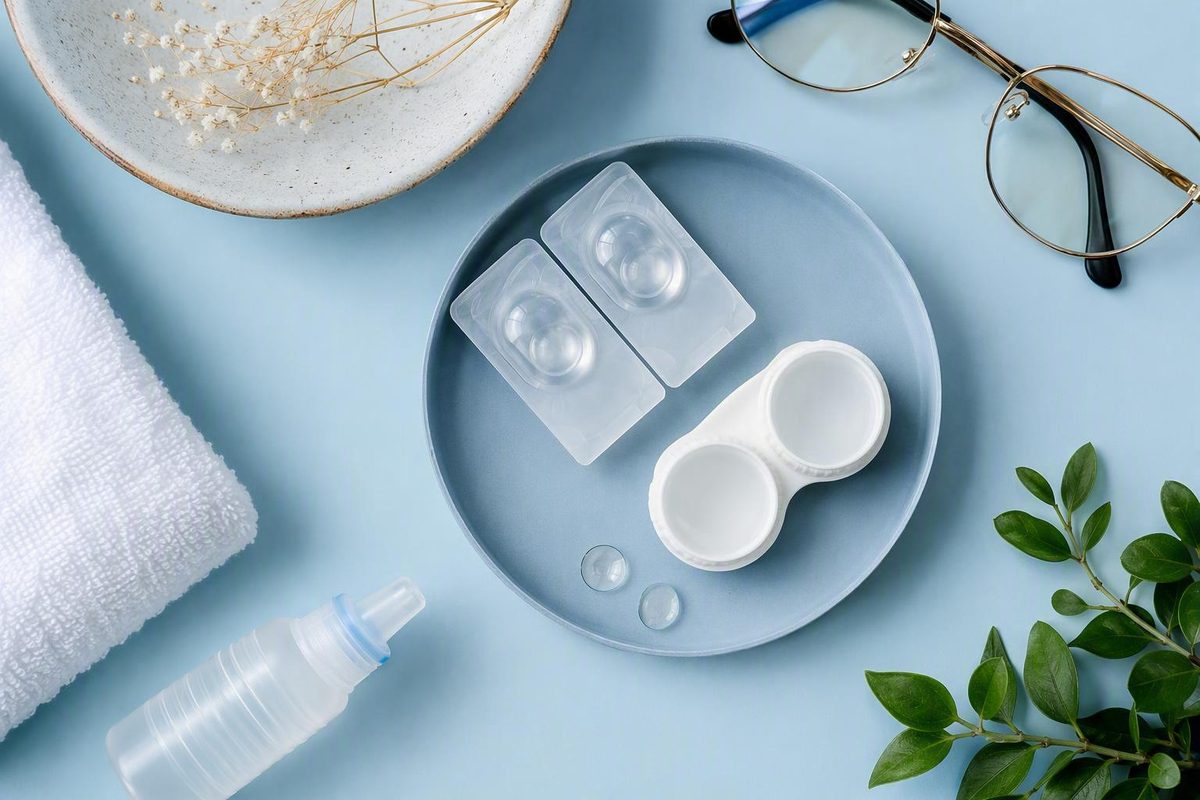
The short answer: do not reuse daily disposable contacts
No. A daily disposable contact lens is intended for one wearing session and should be discarded after removal. That rule still applies when the lens:
- Was worn for only an hour or two
- Looks clean
- Still feels comfortable
- Was removed earlier than expected
- Has been placed in contact-lens solution
Eye-care practices addressing this question advise discarding daily disposables even after brief wear rather than saving them for another session (True Eye Experts).
For practical purposes, single use means one uninterrupted wearing session. It does not mean one calendar day, 24 hours of continuous wear, or a pool of hours that can be divided between multiple sessions. If you put in a fresh lens in the morning, remove it at lunchtime, and want to wear contacts again that evening, the conservative general rule is to open a new lens.
A used lens may still look perfectly transparent. Appearance, comfort, and time worn do not change its replacement schedule. During wear and removal, the lens can be exposed to tear-film deposits, microorganisms, cosmetics, dust, skin oils, and handling. Those changes may not be visible.
Reusing a daily disposable does not guarantee that you will develop an infection or injury. The supplied evidence does not establish how often complications occur or quantify the additional risk from a single episode of reuse. The narrower conclusion is that reuse departs from the lens’s intended schedule and adds avoidable handling, storage, and contamination opportunities.
Follow the labeling for your exact product, your contact-lens prescription, and your prescriber’s instructions. General online advice cannot establish what a particular manufacturer permits or what is appropriate for your eyes.
Daily disposable, daily wear, and extended wear do not mean the same thing
Contact-lens terminology can be confusing because similar-sounding labels describe different aspects of lens use.
Two schedules matter:
- Wearing schedule: When the lens must be removed, including whether overnight wear is permitted.
- Replacement schedule: When that individual lens must be discarded and replaced.
Daily disposable describes a replacement schedule. The lens is used once and discarded after removal.
Daily wear describes a wearing schedule. A daily-wear lens must be removed before sleep, but it may be either a single-use lens or a reusable lens. The words “daily wear” alone do not tell you how frequently to replace it.
It is not another term for “monthly.” A lens with a monthly replacement schedule is not automatically approved for sleeping.
This distinction between daily disposable and daily-wear lenses is explained in a commercial contact-lens retailer’s terminology guide (ContactLenses4Us). Do not rely only on casual descriptions such as “dailies,” “daily contacts,” “reusable contacts,” or “long-wear lenses.”
If you are uncertain, check:
- The outer box
- The individual blister packaging
- Your contact-lens prescription
- The manufacturer’s instructions
- Directions from your eye-care professional
A general comparison is shown below. Exact replacement timing and care requirements must follow the prescribed product rather than a universal calculation.
| Lens replacement type | Uses per lens | Replacement point | Cleaning and storage required? | Prescribed care system required? |
|---|---|---|---|---|
| Daily disposable | One wearing session | Immediately after removal | No; the lens is not intended to be stored for reuse | Follow wear and handling directions, but do not invent a reuse routine |
| Biweekly | Multiple sessions | At the prescribed replacement point for that product | Yes, between sessions | Yes |
| Monthly | Multiple sessions | At the prescribed replacement point for that product | Yes, between sessions | Yes |
Commercial guidance comparing single-use and reusable contacts likewise states that biweekly and monthly lenses require cleaning, storage, and scheduled replacement (1-800 Contacts).
A reusable schedule does not authorize continuous wear, skipped cleaning, or overnight use. Overnight wear is a separate question that should be answered from the exact product labeling and prescription.
Why soaking or rinsing does not make a daily lens reusable
Contact-lens solution cannot change a lens’s labeled replacement schedule. Soaking a used daily disposable does not convert it into a biweekly or monthly lens, and storing it overnight does not give it an approved reuse routine.
Rinsing and disinfection are also different:
- Saline can rinse material from a lens but does not fully disinfect it.
- Compatible disinfecting solution is used as part of the prescribed care system for certain reusable lenses.
- Neither product converts a single-use lens into a reusable one.
Worn contacts can collect tear-film components, microorganisms, makeup, dust, and other debris that may not be visible. Daily disposables are supplied in sealed blisters for fresh use and generally do not come with a repeated cycle of removal, cleaning, disinfection, storage, and reinsertion. A retailer’s detailed explanation of daily-lens care specifically notes that saline does not fully disinfect a lens and that multipurpose solution does not change a daily disposable into a reusable product (ContactLenses4Us).
There is no need to claim that every daily lens develops microscopic tears, loses oxygen permeability, or structurally breaks down after one use. The evidence supplied here does not support those statements as universal facts. The single-use labeling, possible accumulation of deposits and contaminants, extra handling, and absence of a repeated-care routine are sufficient reasons not to reuse the lens.
Some commercial advice is inconsistent about same-day reinsertion. LensPure, for example, says a temporarily removed daily lens may be disinfected in fresh solution before reinsertion, while also saying that daily contacts must not be reused on another day. That is retailer guidance rather than verified labeling for every daily disposable (LensPure).
Unless the manufacturer’s instructions for your exact lens and your prescriber both provide a same-day removal, storage, and reinsertion method, do not treat that commercial exception as generally applicable. Use a fresh lens instead.
Clinician-approved rewetting drops may have a separate role when used exactly as directed, but they do not disinfect a lens or make a daily disposable reusable.
What can happen when a daily disposable is reused
Possible problems from reuse range from poor comfort to an eye condition requiring professional assessment. The evidence does not establish incidence rates, so these are risk categories rather than predictions.
Contamination: Each additional cycle of removal, handling, storage, and reinsertion creates another opportunity for microorganisms or debris to reach the lens.
Deposit buildup: Tear-film components, cosmetics, dust, and other material may remain on a worn lens.
Lens damage: A lens may be folded, nicked, warped, or otherwise damaged during removal, storage, attempted cleaning, or reinsertion.
Dryness and discomfort: A reused or over-worn lens may feel dry, gritty, scratchy, tight, or increasingly noticeable.
Irritation and redness: Handling, deposits, contamination, lens damage, or an unrelated eye problem may contribute to irritation. Redness should not automatically be assumed to be simple dryness.
Blurred or unstable vision: Deposits, poor wetting, lens displacement, damage, or an eye condition can make vision fluctuate or remain blurred.
Infection: Microbial contamination may contribute to infections such as keratitis. Corneal ulcers are among the potentially serious complications cited in eye-care guidance discussing daily-lens misuse (McCauley Celin Eyecare Associates).
These outcomes are possible, not inevitable. The evidence supplied for this article does not establish:
- An absolute infection rate from reuse
- The comparative risk of one accidental reuse versus repeated reuse
- How often severe complications occur
- Whether a symptom-free reuse episode caused no eye changes
People whose eyes feel dry or sensitive may notice discomfort, but symptoms alone cannot establish the cause. A reused lens can feel dry without proving that the wearer has dry-eye disease. Daily disposables are also not universally the best option for everyone with dryness. Material, fit, wearing time, environment, medications, eye-surface health, and other factors can affect comfort.
If fresh lenses repeatedly cause discomfort, redness, or unstable vision, do not try to solve the problem by extending wear or repeatedly replacing lenses throughout the day. Leave the lenses out and ask an eye-care professional to assess the fit, product, wearing schedule, and eye surface.
What to do after accidental reuse, sleep, water exposure, or a dropped lens
The following are conservative default steps, not a treatment protocol. Individual circumstances may require advice from an eye-care clinician, and feeling normal does not prove that every exposure was harmless.
If you inserted yesterday’s daily lens again
Remove and discard it rather than cleaning and reinserting it. Use glasses. If you are uncertain whether it is appropriate to put in a fresh pair—especially after discomfort, redness, or another exposure—contact your eye-care professional instead of testing the eye with another lens.
If you removed a daily lens after brief wear
Discard it. Use a fresh lens the next time you want contacts. A storage case does not preserve an unused portion of the lens’s wearing time.
If you remove contacts for a lunchtime nap, the simplest choices afterward are glasses or a new prescribed pair, provided your eyes feel normal and you have not been advised otherwise. If this routinely requires two pairs a day, discuss a reusable option with your prescriber rather than developing a cleaning routine for daily disposables.
If the lens was dropped
Discard a daily lens that fell onto a counter, floor, sink, towel, clothing, or another surface. Removing visible lint does not confirm that the lens is clean or undamaged.
If the lens dried out
Discard it. Do not try to rehydrate and rescue a dried daily disposable for reinsertion.
If the lens touched tap, shower, pool, or open water
Remove and discard it rather than rinsing it in solution and putting it back. Water exposure can also occur while showering, washing your face, using a hot tub, being splashed, or handling lenses with wet hands. Commercial daily-lens guidance advises avoiding showering and swimming in contacts and discarding a dropped lens rather than reinserting it (Hubble).
These disposal steps do not guarantee that no examination is needed. Contact an eye-care clinician if symptoms develop or if you are concerned about a particular exposure.
If you accidentally slept in daily contacts
Do not forcefully pull out a lens that feels stuck or unusually dry. Once removed, discard it and use glasses rather than reinserting the same lens. Seek clinical advice for difficult removal or persistent or significant symptoms.
Feeling fine immediately after waking does not establish that no problem exists. It also does not mean an injury necessarily occurred. Monitor how the eyes feel and obtain professional advice if you are uncertain.
Prepare for predictable mishaps
A small backup kit can reduce the temptation to salvage a questionable lens. Consider carrying:
- Spare prescribed daily lenses
- Backup glasses and a protective case
- Any contact-lens-compatible drops your clinician has specifically recommended
Spare lenses and glasses are useful for travel, exercise, unexpected naps, sudden irritation, damaged lenses, or a lens dropped during insertion. Do not use the backup lens merely to test an eye that remains painful, red, light-sensitive, or visually altered.
Symptoms that mean you should stop wearing contacts and seek care
Remove the contact lens and do not put it back in if you develop:
- Eye pain
- Marked or worsening redness
- Unusual sensitivity to light
- Discharge
- Persistent blurred vision
- Reduced vision
Do not repeatedly change lenses or continue self-treatment while symptoms persist.
Persistent or significant symptoms warrant prompt assessment by an optometrist, ophthalmologist, or another appropriate eye-care clinician. Dry Eye Watch’s own general safety notice describes sudden vision changes, eye pain, and light sensitivity as reasons to seek same-day clinical attention; that notice is a general precaution rather than an individualized diagnosis (Dry Eye Watch).
Keep contacts out and seek professional advice if discomfort returns, redness persists, vision remains altered, or the pattern recurs with fresh lenses.
When contacting a clinic, explain:
- That you wear contact lenses
- That the lens was a daily disposable
- Whether it was reused, slept in, dropped, dried out, or exposed to water
- When the symptoms began
- Whether your vision changed
- Whether you have pain, redness, light sensitivity, swelling, or discharge
- Whether the symptoms changed after removing the lens
If you are unsure about urgency, call an eye-care service rather than putting in another lens.
This article provides general information, not a diagnosis or an individualized treatment plan. An examination is needed to diagnose persistent or significant eye symptoms.
Safer options if you need to remove and reinsert lenses
Daily disposables may not suit a routine that regularly involves naps, split wearing sessions, daytime removal, or repeated reinsertion. In that situation, ask an eye-care professional whether a properly fitted reusable lens is appropriate.
Possible options include:
Biweekly lenses: These are designed for multiple wearing sessions during their prescribed replacement period. They require the specified cleaning, disinfection, storage, and replacement routine.
Monthly lenses: These may also be worn for multiple sessions when used according to their labeling and prescription. The exact replacement clock and discard date should follow the instructions for the particular product.
Backup glasses: Glasses provide a practical alternative during naps, water activities, irritation, or situations in which a lens must be removed unexpectedly.
Contacts on selected days: Wearing glasses on routine days and contacts only for work, sports, or social occasions can reduce contact-lens use without reusing a single-use product.
Daily disposables for particular occasions: A prescriber may determine that daily lenses are suitable for occasional use even when another option is used more regularly. Each daily lens must still be discarded after its one session.
Reusable contacts are not simply daily lenses kept for longer. They are products intended for repeated use under a prescribed care system. That system may specify compatible disinfecting solution, storage, rubbing or rinsing steps, case care, and an exact replacement schedule.
Do not assume that reusable lenses will automatically be safer, cheaper, more comfortable, or more environmentally friendly. Suitability and safety also depend on consistent care.
Discuss your lens type and schedule with an eye-care professional if you:
- Frequently remove lenses and want to wear them again later
- Nap unpredictably
- Regularly experience dryness, irritation, redness, or blurred vision
- Struggle to follow your current wearing schedule
- Find daily disposables difficult to afford
- Have difficulty cleaning or handling reusable lenses
- Work in dusty, windy, air-conditioned, or otherwise challenging environments
- Need different contact-lens routines on different days
The basic rule is simple: use each lens according to the replacement schedule printed on its packaging and prescribed for you.
Can I reuse a daily contact if I wore it for only an hour?
No. Brief wear does not reserve the lens for another session. Once a daily disposable has been worn and removed, discard it.
“Daily” is not a bank of hours that can be split between morning and evening or spread across two days. A lens that looks clear after an hour may still have been exposed to tears, handling, cosmetics, dust, and microorganisms. If you know you will need to remove your contacts soon, wear glasses or plan to open a fresh lens later.
Can I take a daily contact out and put it back in later the same day?
The safest general answer is no. Treat removal as the end of that daily lens’s wearing session and use a new lens if you want contacts again later.
Commercial advice about same-day reinsertion is inconsistent, and generic retailer advice cannot override the labeling for your lens. Only follow a reinsertion routine if the manufacturer’s instructions for that exact product and your prescriber explicitly permit it and explain the appropriate method.
How many hours can I wear a fresh pair of daily contacts?
There is no reliable universal hour limit for every lens and wearer. Acceptable continuous wear depends on the exact product, prescription, fit, eye health, tear film, environment, activities, and your prescriber’s instructions.
“Daily” does not mean 24 hours of continuous wear. Follow the limit given for your product and remove the lenses sooner if you develop discomfort, redness, dryness, or unstable vision. Do not sleep in them unless the exact lens labeling and your prescription authorize overnight use.
If you repeatedly cannot tolerate fresh lenses for the recommended period, arrange an eye-care assessment rather than trying to build tolerance through longer wear.
What should I do if I accidentally slept or showered in daily contacts?
After accidental sleep, do not forcefully remove a lens that feels stuck. If it cannot be removed gently, contact an eye-care professional. Once removed, discard it and use glasses.
After showering in daily contacts, remove and discard them rather than cleaning and reinserting them. These steps are conservative defaults, not a guarantee that an examination is unnecessary.
Seek prompt professional advice for persistent or significant pain, redness, light sensitivity, discharge, blurred vision, or reduced vision.
Can I switch to biweekly or monthly contacts to save money?
Possibly, but reusable lenses require a professional fitting and a care routine you can follow consistently. They must be cleaned, disinfected, stored, and replaced according to the prescribed product instructions.
Compare the total cost of lenses, solution, cases, early replacements, and follow-up care rather than looking only at the box price. Reusable lenses do not suit every eye, prescription, schedule, or wearer. Glasses on selected days or daily disposables only for particular occasions may also reduce costs without misusing a single-use lens.
Remember: use one fresh daily disposable for one wearing session, then discard it. Throw away a daily lens that has been removed, dropped, dried out, slept in, or exposed to water. Use backup glasses, and seek prompt care for pain, marked redness, light sensitivity, discharge, or changes in vision.