
Causes of Dry Eye Syndrome: What Can Disrupt Your Tears
Learn how eyelid oil glands, aging, medicines, screens, contact lenses and health conditions contribute to dry eye—and when to get an eye exam.
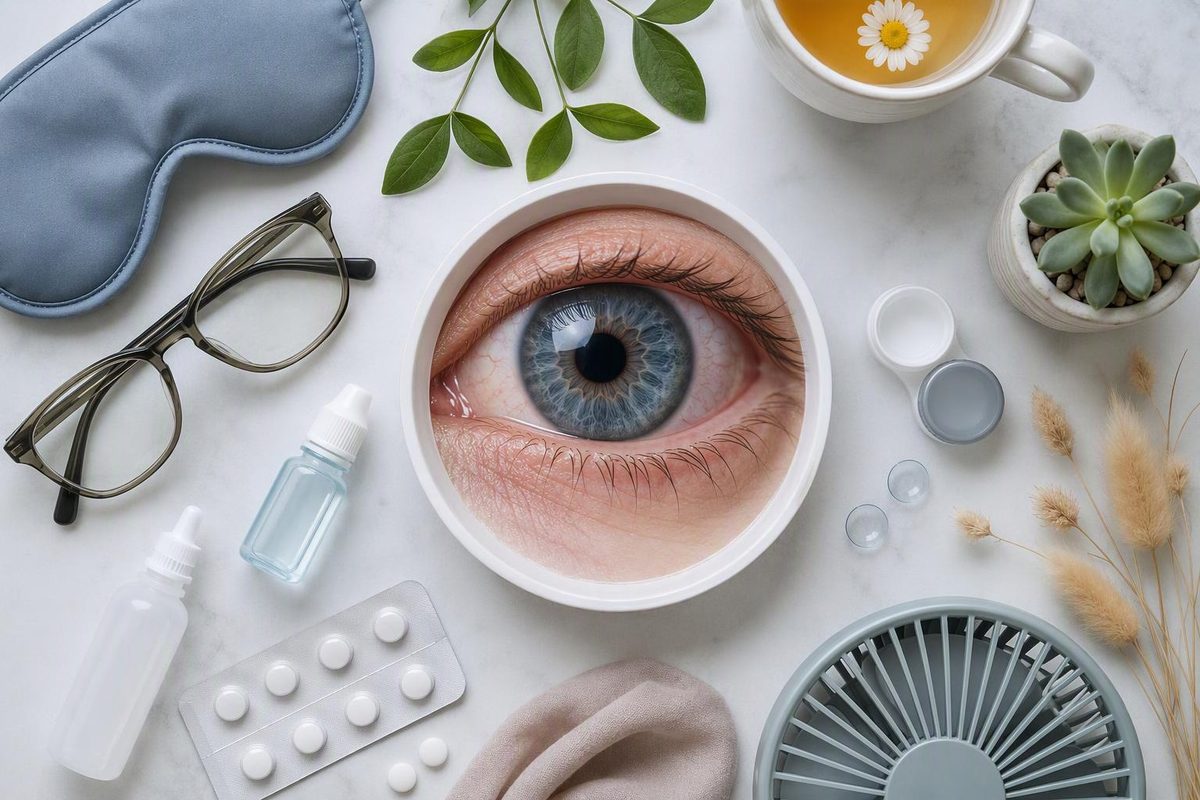
Dry eye syndrome happens when your eyes make too few tears, tears evaporate too quickly, or the tear film does not keep the eye surface properly wet. The cause is not always a simple shortage of tears: eyelid problems, medicines, health conditions and everyday surroundings can all contribute. More than one factor may be involved, and treatment depends on the cause. National Eye Institute
Burning, grittiness and blur can occur with dry eye. Even watery eyes can be a sign—the irritation may trigger extra tearing without fixing the underlying tear-film problem. Symptoms alone do not establish the cause. Mayo Clinic
Get same-day eye care for eye pain, sudden vision changes or new light sensitivity. A red eye in a contact-lens wearer also needs urgent assessment because infection is possible. Sudden loss of vision, severe eye pain or pain when looking at light warrants emergency care rather than waiting for a routine appointment. NHS
1. Blocked eyelid oil glands
Small glands along the eyelid edges, called meibomian glands, supply oil that helps slow tear evaporation. When these glands become blocked or do not work well, tears can dry up too quickly. This is called meibomian gland dysfunction, or MGD.
MGD is an important cause of evaporative dry eye. It can occur with eyelid inflammation, known as blepharitis. Blocked glands are more common in people with rosacea or other skin disorders. These are eyelid and oil-gland problems, not simply a lack of watery tears. Mayo Clinic
If an eye-care professional identifies blocked glands, eyelid care may be part of the plan. Our guide to warm compresses for dry eyes explains when warmth may help and how to avoid overheating.
2. Aging, hormones and health conditions
Tear production tends to decline with age, making dry eye more likely after age 50. Hormonal changes during pregnancy and menopause can also make it harder to produce enough tears.
Health conditions that can contribute to dry eye include diabetes, thyroid disorders and autoimmune diseases such as lupus and Sjögren syndrome. In Sjögren syndrome, the immune system attacks the glands that produce tears and saliva. Dry eyes together with persistent dry mouth or trouble swallowing are worth mentioning to your clinician, though that combination does not by itself diagnose Sjögren syndrome. National Eye Institute
Vitamin A deficiency is another possible cause, but dry-eye symptoms alone are not evidence that you have a deficiency. Mayo Clinic
3. Medicines and eye-drop ingredients
Some medicines can reduce tear production. Examples include certain:
- Antihistamines and decongestants used for allergies or colds.
- Antidepressants.
- Blood-pressure medicines.
- Acne treatments and hormone medicines.
Preservatives in topical eye drops can also contribute to tear-film problems. Not every medicine in these groups causes dryness in every person; a medication review is more useful than assuming the whole category is unsuitable. Mayo Clinic
If symptoms began after starting or changing a medicine, tell the prescriber or pharmacist. Do not stop a prescribed medicine on your own. NHS
4. Screens, concentrated tasks and dry air
People often blink less while looking at screens. Reading and driving can have a similar effect. Less frequent blinking leaves more time for tears to evaporate between blinks.
Wind, smoke and dry air can speed evaporation too. Air conditioning, heating and a fan blowing toward your face may make an existing problem more noticeable. These exposures can cause or worsen dryness; they do not rule out an underlying gland or tear-production problem. National Eye Institute, Mayo Clinic
For mild symptoms, take regular breaks, blink deliberately and redirect airflow away from your eyes. Mayo Clinic
5. Contact lenses, eye surgery, eyelid problems and allergies
Contact-lens wear increases the likelihood of dry eye. Laser vision-correction surgery can reduce tear production, with related dry-eye symptoms usually temporary. Eyelids that turn inward or outward can contribute to tear evaporation, while eye allergies can also disrupt the tear film. National Eye Institute, Mayo Clinic
If contacts feel dry or uncomfortable, remove them and use glasses to rest your eyes. Persistent discomfort calls for an assessment rather than simply switching brands. NHS
How to find the cause—and choose relief
An eye examination can check tear quantity, how quickly tears dry up and eyelid structure. Bring a list of medicines and eye drops, and describe when symptoms occur and whether you wear contacts. Arrange an appointment if symptoms persist despite self-care or interfere with everyday activities. National Eye Institute, NHS
Artificial tears may relieve mild dryness, but symptom relief is not the same as treating blocked glands, changing a contributing medicine or addressing an underlying illness. National Eye Institute Our guide to choosing dry-eye drops explains the options. The right longer-term plan starts with identifying what is disrupting your tears.
This article provides general information, not a diagnosis or a substitute for clinical care.