
Microwave Eye Mask for Dry Eyes: Safe Heating and Care
Compare microwave eye mask instructions, learn when warmth helps dry eyes, and check heating, cleaning and safety limits before choosing a reusable mask.
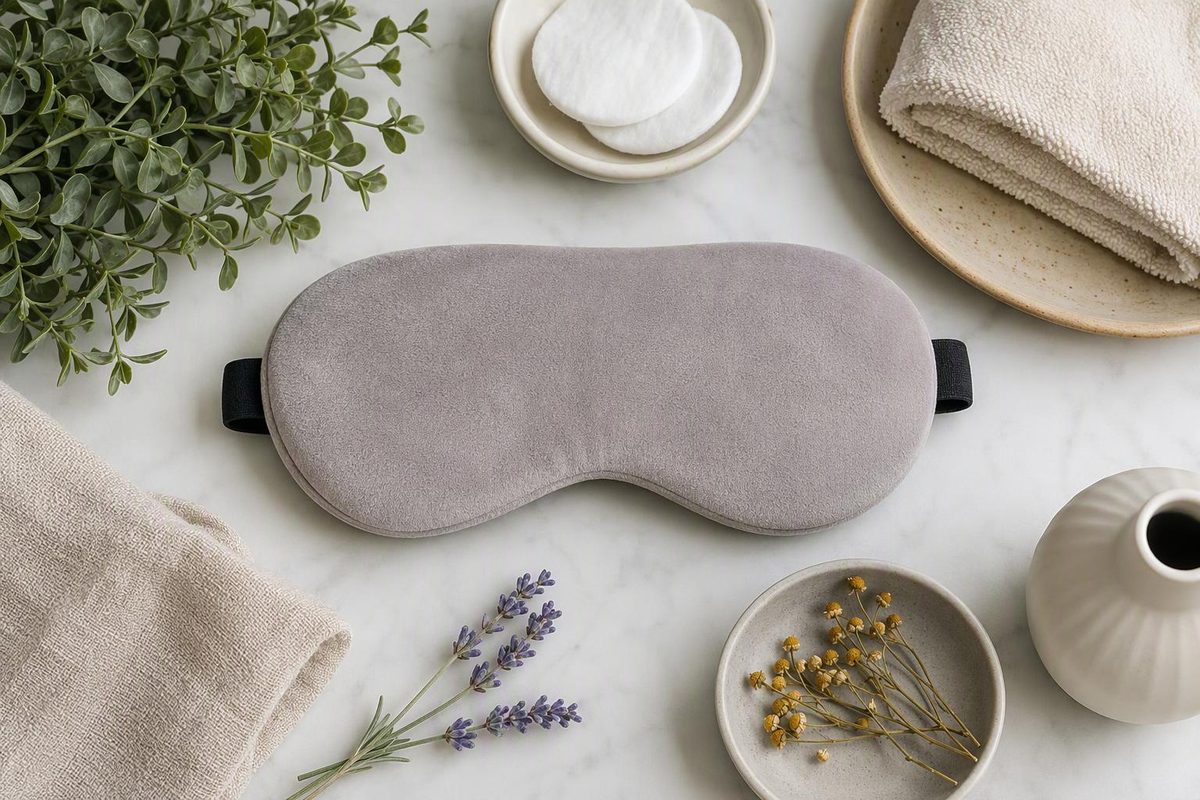
A microwave eye mask may help dry eyes when thickened oil in the eyelid glands contributes to the problem. Its main advantage over a warm washcloth is holding warmth longer, making a regular compress routine easier. Choose a mask designed for eyelid warming with clear heating and cleaning instructions. It is not a cure for every cause of dry eye, and there is no universal microwave time that is safe for every mask.
Choose a mask below to check its label instructions; for OPTASE, also select your microwave’s wattage.
Mask Label Finder
Use the leaflet supplied with your exact model. These instructions are not interchangeable.
Bruder Moist Heat Eye Compress
Start with 20 seconds; wear for 8–10 minutes.
Add heat only in 5-second increments. Never exceed 30 seconds total.
Setup and Cleaning
Use a microwave-safe plate on the rotating tray; remove racks and shelves. Follow the supplied leaflet’s rules for reheating a recently used mask.
Wait 2 hours after use before washing. Hand-wash in cold water with mild detergent, then air-dry at least 24 hours.
Wattage-specific timing is not supplied in this comparison. Check your leaflet or ask the manufacturer if your microwave is not covered.
OPTASE Moist Heat Mask — US Leaflet
800W: 25 seconds. 900W or higher: 15 seconds.
Wear for 10 minutes. For other or unknown wattages, a heating time is not provided here; ask the manufacturer rather than guessing.
Setup, Cleaning and Precautions
Place flat on a clean, dry turntable so the mask can rotate freely. Follow the supplied leaflet’s rules for reheating a recently used mask.
Wipe with a damp cloth; air-dry at least 24 hours. Do not share. Head straps contain latex.
The leaflet says not to use with poor circulation or reduced sensation, and lists diabetes and recent eye surgery among its precaution factors. Do not apply to sensitive skin or open wounds.
Other Models
Heating time: —
No timing is provided here for other masks. Use your exact model’s leaflet; do not borrow Bruder or OPTASE timings.
Touch-test before applying. Use only comfortable warmth over closed eyes, without pressure. Remove immediately if too hot or uncomfortable.
Sources: Bruder use-and-care instructions and OPTASE Moist Heat Mask US leaflet, linked in the article. Label comparison, not a product ranking.
Warmth Helps When Poor Oil Flow Contributes to Dry Eye
The meibomian glands—small oil glands along the eyelids—supply oil that helps keep tears from evaporating too quickly. When that oil becomes thick or flows poorly, the tear film can become unstable. This is called meibomian gland dysfunction, or MGD. Warmth helps soften the thickened oil so it can flow more readily.
Dry eye can also involve too little watery tear production or other problems that a mask alone will not address. Worcestershire Acute Hospitals’ treatment guide explains these different causes. If your symptoms have not been assessed, an eye-care professional can check whether poor oil-gland function is part of the problem.
A 2024 review of warm-compress studies found that repeated use could improve MGD-related symptoms and, in many studies, gland function or tear-film measures. Microwave masks generally retained heat better than towels, which needed frequent reheating. Results varied by device and routine.
Choose by Heating Instructions, Fit and Cleaning Method
Choose a mask designed for eyelid warming, not simply a sleep mask that happens to be microwaveable. Before buying, check whether its instructions cover your microwave’s wattage and state clear heating limits. If the wattage is not covered, ask the manufacturer rather than guessing a heating time.
The mask should rest comfortably over closed lids without needing a tight strap. Check its materials and precautions, especially if you have a latex allergy, sensitive skin, reduced sensation or recent eye surgery. Inspect it for wear or damage before each use.
Cleaning requirements can determine whether a mask fits your routine. Some masks can be hand-washed; others are wipe-clean only. Drying may take a full day, so a mask that has just been cleaned may not be ready for your next session.
“Moist heat” masks are a reasonable option: the 2024 review found favorable heat-retention results for several such devices. That does not establish one universally best brand. Comfort and a routine you can maintain also matter.
Bruder and OPTASE Have Different Label Instructions
These are label comparisons, not product rankings. The OPTASE details apply to its US leaflet; do not transfer them to another model or market.
| Mask | Heating and Wear | Cleaning and Materials |
|---|---|---|
| Bruder Moist Heat Eye Compress | Start with 20 seconds. Add heat only in 5-second increments; never exceed 30 seconds total. Wear for 8–10 minutes. | Hand-wash in cold water with mild detergent. Wait 2 hours after use before washing; air-dry at least 24 hours. |
| OPTASE Moist Heat Mask, US leaflet | Heat for 25 seconds at 800W or 15 seconds at 900W or higher. Wear for 10 minutes. | Wipe with a damp cloth; air-dry at least 24 hours. Head straps contain latex. |
Sources: Bruder use-and-care instructions and OPTASE US leaflet.
Follow the leaflet supplied with your exact model, including its microwave setup and rules for reheating a recently used mask. The timings above are not interchangeable, and the maximum heating time is not a target to reach.
Heat It Only as Directed and Test Before Applying
Prepare the Mask and Microwave
Wash your hands, remove contact lenses and remove eye makeup. OPTASE explicitly requires lens removal and cleaning away makeup or debris before use.
Prepare the microwave as your manufacturer directs. Bruder specifies a microwave-safe plate on the rotating tray and removal of racks and shelves. OPTASE specifies a clean, dry turntable, with the mask flat and able to rotate freely.
Do not borrow another brand’s timing or keep adding heat because the mask feels less warm later. Skin burns have been reported with microwave masks, so extra heat is not a shortcut to better results. Warm-compress review
Apply Comfortable Warmth Without Pressure
Touch-test the mask before applying it. It should feel comfortably warm, not painfully hot. If it is too hot, let it cool and test again.
Rest it loosely over closed eyes for the labeled duration. Do not tighten it to press on the eyes or fall asleep wearing it. Remove it immediately if it feels too hot or causes discomfort.
The review recommends about 10 minutes once daily, but your product or clinician may recommend a different schedule. For the broader routine, see our guide to warm compresses for dry eyes.
Clean It According to Its Own Leaflet
Do not assume every bead-filled mask is washable. Follow the cleaning and drying method for your exact product, including any waiting period before washing. Keep the mask for your own use; OPTASE specifically says not to share its mask.
The preparation, application and cleaning instructions above reflect the manufacturer leaflets linked in the comparison, not a universal set of directions for all microwave masks.
Stop for Discomfort and Get Advice for Warning Symptoms
Check with your eye-care professional before starting after eye surgery or if you have reduced sensation around the eyes. The OPTASE leaflet says its mask should not be used by people with poor circulation or reduced ability to feel sensation, and lists diabetes, recent eye surgery and other factors in that precaution. It also says not to apply the mask to sensitive skin or open wounds. These are precautions for that product, not evidence that every other mask is suitable.
Brief blur can occur after warming; wait until vision is clear before driving. Do not assume persistent or worsening blur is an expected effect. Bruder instructions
Seek same-day eye care for eye pain or a red eye while wearing contacts. Sudden vision changes—including loss of vision—or pain when looking at light need emergency assessment. Do not treat these symptoms with a mask. If mild dryness remains after a few weeks of home care, arrange an examination rather than increasing the heat. NHS guidance
A mask may sit alongside lubricating eye drops, but it should not replace prescribed treatment. This is general information, not an individual diagnosis or treatment plan.