
LipiFlow Treatment for Dry Eye: Benefits, Risks and Fit
LipiFlow uses heat and pressure to treat blocked eyelid oil glands. Learn who may benefit, what treatment involves, risks and realistic results.
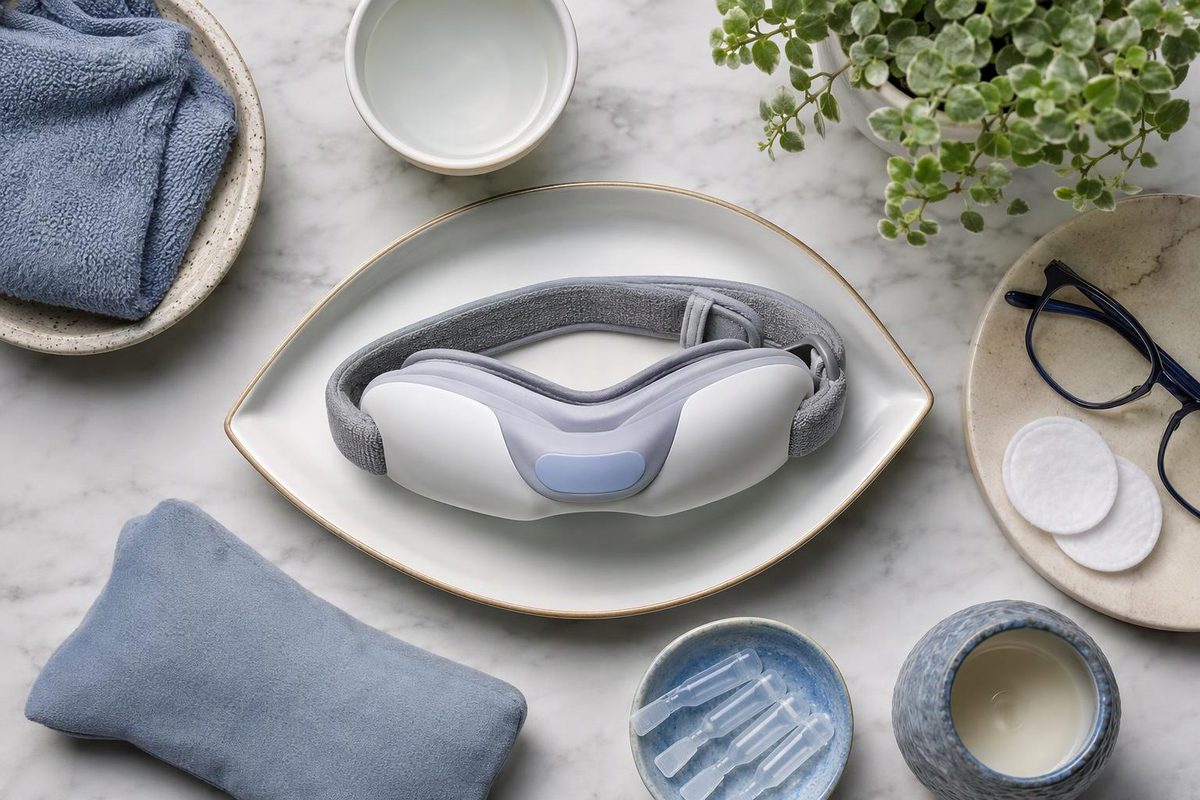
LipiFlow is an in-office treatment for adults that uses controlled heat and pressure to help clear blocked oil glands in the eyelids. It targets meibomian gland dysfunction (MGD)—not every cause of dry eye. It may help selected patients, but research does not establish that it reliably works better than simpler treatments such as warm compresses. Cochrane’s review supports that distinction.
The most useful question before booking is: Are blocked, still-viable oil glands a substantial cause of my symptoms?
Who might benefit?
Meibomian glands release oil that helps stabilize tears and limit evaporation. When their secretions become obstructed or abnormal, the tear film can become unstable. LipiFlow aims to improve oil flow by clearing those obstructions. Cochrane
An eye-care professional should assess gland function before recommending treatment. This can include pressing gently on the eyelids to examine the oil and using meibography, imaging that shows the glands and areas of gland loss. The authors of a Cochrane review summary recommend offering LipiFlow only when viable glands remain. Clearing a blockage is not the same as replacing glands that have been lost.
LipiFlow is commonly considered when initial MGD care—eyelid hygiene, warming and appropriate lubricating drops—has not provided enough relief. Clinical review summary Other causes may need separate treatment even when MGD is also present; the manufacturer’s precautions flag conditions such as Sjögren’s syndrome, allergies and medicines that cause dryness.
For the home-care approach, see our warm-compress routine for dry eyes.
What happens during the appointment?
The name for the procedure is thermal pulsation: warming combined with repeated pressure.
- Numbing eye drops may be used before the device is placed.
- A sterile, single-use eyepiece sits under and over the eyelids. Its inner section warms the eyelids while its outer section applies pulsing pressure.
- You keep your eyes closed during the treatment cycle.
- The cycle lasts 12 minutes, and both eyes can be treated simultaneously. Examination and setup take additional time.
The device is designed to shield the cornea—the clear front surface of the eye—from direct heat and pressure. These procedural details are described in the full Cochrane review and NICE’s technology overview.
Expect warmth and pressure, not a promise of a completely sensation-free procedure. Tell the treating professional if it hurts. Contact-lens wearers should ask when to remove lenses and when to resume wearing them.
How well does LipiFlow work—and how long might it last?
The intended benefit is better gland secretion and, in turn, more stable tears and less discomfort. But improved gland measurements and noticeable symptom relief are not interchangeable outcomes.
A Cochrane review published in 2024 included 13 randomized trials with 1,155 participants, using evidence searched through October 2022. Overall, LipiFlow performed similarly to other commonly used dry-eye treatments. Comparisons with warm compresses produced conflicting symptom results, and there was no clear difference in several gland-function and tear-film measures. Confidence in the evidence was low to very low because of bias and differences between studies. Cochrane
A later meta-analysis, searching through December 2024, found improvement in some gland and eye-surface measures but no clear overall advantage over comparison treatments on a commonly used symptom questionnaire. That does not mean nobody benefits; it means LipiFlow should not be presented as a proven superior treatment or guaranteed cure.
Relief also need not be immediate. UW Health’s thermal-pulsation patient guidance says improvement may take six to eight weeks and benefits may last up to 12 months, with variable results. These are possible outcomes, not a guaranteed timetable. The Cochrane review also notes uncertainty about the benefit of repeat treatments.
Agree on a follow-up date and how success will be measured—both your symptoms and examination findings. Ask which drops or eyelid-care steps should continue rather than assuming one session replaces ongoing care.
Risks and reasons to postpone treatment
The manufacturer lists possible pain, eyelid swelling or irritation, redness, burning, tearing, visual disturbance and corneal abrasion. Its labeling also identifies potential serious injuries, including thermal injury and corneal infection, which it says are not anticipated because of the device’s safeguards. The Cochrane trials reported no treatment-related, vision-threatening adverse events; that is reassuring but does not establish zero risk. Manufacturer safety information; Cochrane
The manufacturer’s U.S. labeling says not to use LipiFlow in people with certain conditions, including:
- Eye surgery, injury or ocular herpes within the previous three months.
- Active eye infection, including a stye, or specified active/recent inflammatory eye conditions.
- Eyelid abnormalities affecting lid function.
- Eye-surface abnormalities that could compromise the cornea.
Severe eyelid inflammation should be treated medically first. Tell the clinician about existing punctal plugs: treatment may loosen them. These are examples, not the complete screening checklist. Manufacturer labeling
Seek same-day eye care for sudden vision changes, eye pain or light sensitivity, including after treatment, rather than assuming these are ordinary dry-eye symptoms.
What to ask before paying
Ask for a written quote and confirm coverage with your insurer; the clinical review summary notes that LipiFlow is frequently not covered by health plans.
Before agreeing, clarify:
- What examination findings make me a good candidate?
- Why choose LipiFlow rather than continued home care or another treatment?
- Does the quote include both eyes, testing and follow-up?
- What is the next step if my symptoms do not improve?
- What findings—not just a calendar interval—would justify another session?