
Best Lubricating Eye Drops: A Shortlist by Need
Compare three lubricating eye-drop options for daytime dryness, evaporative dry eye and thicker relief, with preservative and contact-lens checks.
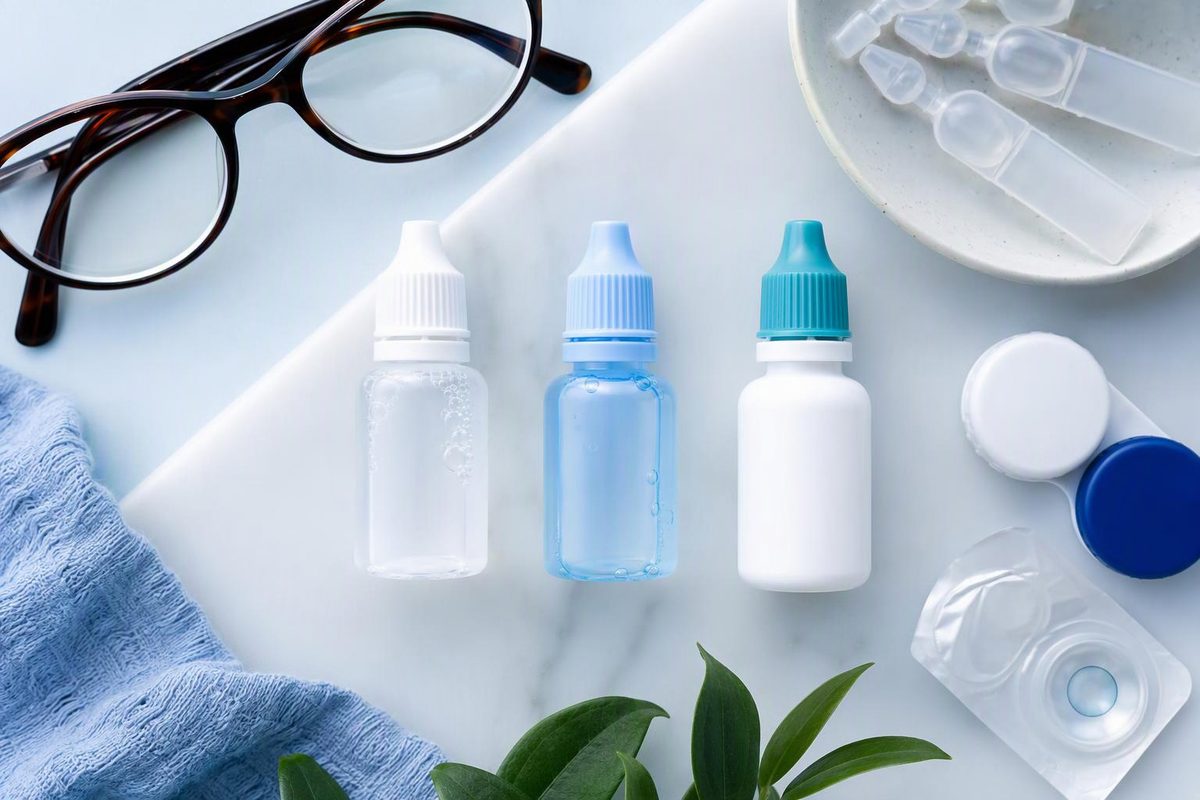
For mild dryness when you do not yet know the cause, a plain preservative-free liquid artificial tear is a reasonable first option. Refresh Plus is one example. If an eye-care professional has identified tears that evaporate too quickly, an oil-containing formula such as Systane Complete PF may fit better. For thicker relief when temporary blur is acceptable, Refresh Celluvisc is an option.
These are choices by use case—not a ranking of proven winners or products we have tested. The American Academy of Ophthalmology (AAO) says no single brand works best for everyone. Lubricating drops, also called artificial tears, provide symptom relief; they do not necessarily treat the underlying problem.
Three options worth comparing
The examples below use U.S. labeling and manufacturer information checked on October 9, 2026. Match the exact product name and read your own package, especially when buying in another country.
| Your need | Example to consider | What distinguishes it | Main trade-off |
|---|---|---|---|
| A straightforward daytime starting point | Refresh Plus | Preservative-free liquid with carboxymethylcellulose sodium 0.5%, supplied in single-use vials | Discard the vial after use, even if liquid remains |
| An oil-containing option for evaporative dry eye | Systane Complete PF | Preservative-free formula with propylene glycol 0.6%; mineral oil and phospholipids are inactive ingredients | Shake before use; its normal appearance is milky white |
| Thicker relief for evenings or other times when temporary blur is acceptable | Refresh Celluvisc | Preservative-free gel with carboxymethylcellulose sodium 1%, supplied in single-use vials | Its thickness can cause temporary blurred vision; discard the vial after use |
Formula and handling details come from the Refresh Plus label, Alcon’s Systane Complete PF product information, and the Refresh Celluvisc label.
When an oil-containing drop makes sense
Evaporative dry eye means tears evaporate too quickly, often because their oily layer is deficient. In the AAO’s selection guide, ophthalmologist Christopher Starr recommends considering lipid—or oil—containing lubricants for this pattern. Many people have mixed causes, so burning or grittiness alone cannot tell you which formula you need. (AAO guidance)
An oil ingredient is a reason to consider a product, not proof that it will outperform a plain tear for you. Likewise, a higher lubricant percentage does not automatically make a drop better: Celluvisc offers a thicker texture, with a corresponding blur trade-off. Avoid driving or other tasks requiring clear vision until that blur clears.
For the broader comparison of liquids, gels and ointments, see eye drops for dry eyes: how to choose the right type.
Preservative-free, bottle or vial?
Prioritize preservative-free drops if you need lubrication more than four times daily over a long period. For occasional use—a few drops per week—a preserved artificial tear may be reasonable and generally costs less. These are practical selection thresholds in the AAO’s guidance, not a universal safety boundary or a reason to keep escalating drops without an examination. (AAO guidance)
Preservative-free products come in both single-use vials and specially designed multidose bottles. Choose packaging you can open and control comfortably. Vials create more plastic waste; bottles may be more convenient for regular use. Neither format removes the need for clean handling.
For a closer comparison, see preservative-free eye drops: how to choose.
Contact lenses change the choice
Preservative-free does not automatically mean safe to put over contact lenses. Check whether the exact product explicitly allows use while wearing your lens type. Otherwise, remove the lenses and follow the product’s instructions about reinsertion. (AAO contact-lens guidance)
Alcon currently states that Systane Complete PF is safe with soft contact lenses, but also says it is not a rewetting drop. Do not extend that statement to rigid lenses or other Systane formulas. (Alcon product information)
If the main task is moistening lenses during wear, start with rewetting drops designed for contacts, rather than assuming every artificial tear is interchangeable.
Use the drop safely—and know when to stop shopping
Look for “artificial tears” or “lubricant,” not merely “redness relief.” Drops containing tetrahydrozoline or naphazoline can worsen symptoms and redness over time; they are not a substitute for choosing a lubricant. (AAO guidance)
Wash your hands, keep the tip from touching your eye or any surface, and check the FDA’s eye-drop safety alerts. Follow the package’s dose, storage, expiration and after-opening instructions.
Seek same-day eye care for sudden vision changes, eye pain or light sensitivity. Discharge or marked redness also warrants prompt assessment rather than another lubricant trial. Stop using the drop if these problems develop. For nonurgent symptoms, arrange an examination if you regularly rely on drops more than two or three times daily; the AAO advises checking the underlying cause. The listed products’ instructions also direct you to stop use and ask a doctor if symptoms worsen or persist beyond 72 hours. (AAO guidance; FDA safety advice; Refresh Plus label)