
Whole Food Vitamins: What the Label Means for Eye Health
A whole food label doesn't prove dry-eye relief. Learn how to compare nutrient doses, recognize vitamin A risks and distinguish multivitamins from AREDS2.
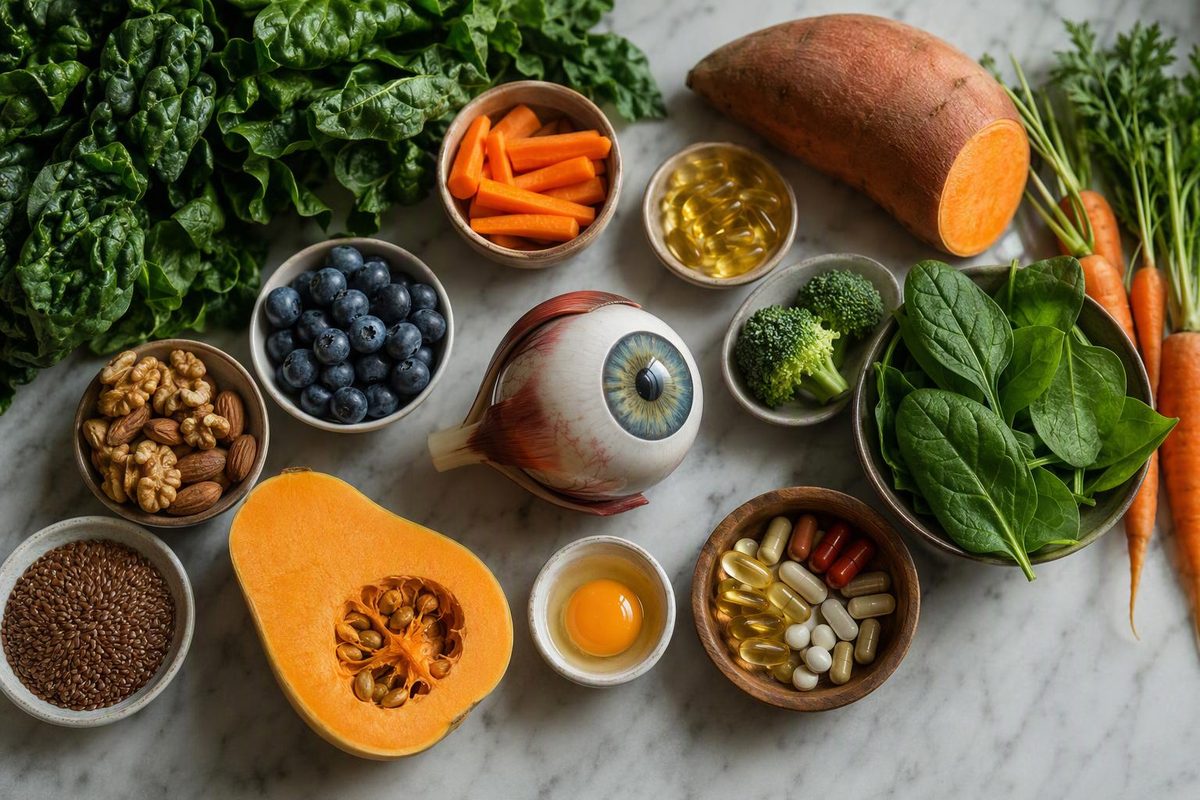
A “whole food” label does not establish that a vitamin supplement will relieve dry eye. If you are buying vitamins for eye comfort, the useful questions are which nutrients the product contains, how much it provides, and whether you have a nutritional need or a diagnosed eye condition that calls for supplementation.
What does “whole food” mean on a vitamin bottle?
The phrase emphasizes a connection to food ingredients, but it should not be read as “every nutrient comes only from whole foods.” For example, MegaFood describes its Women’s One Daily formula as containing essential vitamins and real food. That is a description of the product’s composition, not independent evidence that it treats an eye condition. Manufacturer’s product description.
Even the broader category “multivitamin/mineral” has no standard regulatory definition specifying which nutrients or amounts a product must contain, according to the NIH Office of Dietary Supplements. Formulas vary considerably, and findings from a study of one formula cannot automatically be applied to another. NIH multivitamin fact sheet.
Treat “whole food” as a reason to examine the label—not as a guarantee of better absorption, greater safety or better eye comfort. “Natural” does not always mean safe, and supplements sold in stores may differ from those tested in studies. NCCIH supplement guidance.
Can these vitamins help dry eyes?
Nutrition matters, but correcting a deficiency is different from taking extra vitamins when your intake is already adequate.
Vitamin A supports normal vision and the eye’s surface. Deficiency can cause an eye disorder called xerophthalmia, which can begin with difficulty seeing in low light and eventually damage the cornea. Vitamin A deficiency is rare in the United States, although people with conditions such as Crohn’s disease, celiac disease or cystic fibrosis can be at greater risk. NIH vitamin A review and consumer guidance.
Dry eye also has many non-nutritional causes, including problems with eyelid oil glands, medicines and reduced blinking during screen use. A vitamin bottle does not identify which cause applies to you. For mild dry eye, artificial tears are a common symptom-relief treatment; persistent symptoms need assessment so care can address the underlying problem. Mayo Clinic’s explanation of causes and National Eye Institute treatment guidance.
If you have a very restricted diet, an absorption disorder or new difficulty seeing at night, discuss nutritional assessment with a clinician rather than starting high-dose vitamin A yourself. For evidence on specific supplements, see food supplements for dry eyes.
Read the dose before the food claims
When comparing bottles, focus on these checks:
- Serving size and nutrient amounts. Compare the full daily serving, not simply one tablet. The percentage Daily Value helps compare products; it is not a dry-eye treatment dose. Basic multivitamins generally provide nutrients around recommended amounts, while some specialized formulas contain much higher levels.
- Overlap with other products. Count your regular multivitamin, eye-health formula and single-nutrient supplements together. Combining them can push intake above safe upper limits.
- Your medicines and life stage. Ask a pharmacist or clinician to review the formula if you take medicines, are pregnant or may become pregnant. For example, vitamin K can affect warfarin treatment. These considerations matter regardless of food-based branding. NIH dosing and safety guidance.
Vitamin A deserves particular attention. Retinyl acetate and retinyl palmitate are forms of preformed vitamin A. For adults aged 19 and older, its daily upper limit is 3,000 micrograms from all food, drink and supplement sources—not a target to aim for. If a label lists both preformed vitamin A and beta-carotene, only the preformed portion counts toward this limit. A pharmacist can help interpret the amounts. NIH vitamin A dose guidance.
Excess preformed vitamin A can cause harm and, during pregnancy, birth defects. High-dose beta-carotene supplements can also raise lung-cancer risk in smokers and former smokers. This warning concerns supplements, not beta-carotene-rich vegetables. NIH vitamin A safety guidance.
A whole food multivitamin is not a substitute for AREDS2
AREDS2 is a specific supplement formula for selected people with age-related macular degeneration, or AMD—not a general eye-comfort multivitamin. It may help people with intermediate AMD in one or both eyes, or late AMD in only one eye. Regular multivitamins and food cannot provide the studied mix in the required amounts. If your eye clinician recommends AREDS2, do not replace it with a “whole food” product based on branding. National Eye Institute AREDS2 guidance.
For everyday nutrition, aim to meet needs primarily through a varied diet; supplements can fill specific gaps but cannot replace food. Vitamin A sources include leafy greens, carrots, sweet potatoes, eggs and dairy. NIH dietary guidance and food sources.
Do not wait for vitamins to work if you develop sudden vision changes, eye pain or light sensitivity: seek same-day eye-care attention. Sudden loss of vision or severe sudden symptoms warrant emergency care. NHS eye-pain guidance.