
Why Does My Eyelid Hurt When I Blink?
A tender bump, inflamed lid edge, dry eye or corneal scratch can hurt with each blink. Match the pattern and know when to seek prompt eye care.
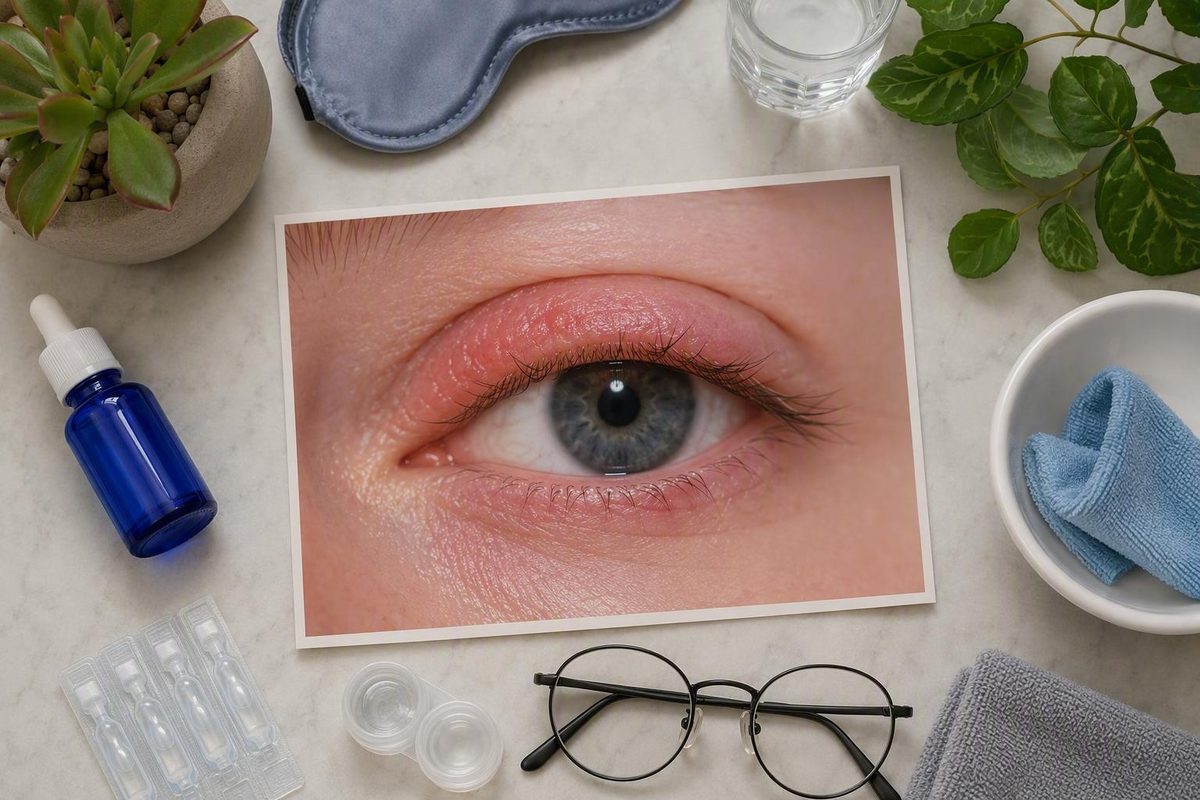
Blinking presses the eyelid against the eye’s surface. If either area is irritated, that movement can make the discomfort more noticeable. A sore spot in the lid suggests a stye or inflamed oil gland; burning, grittiness or crusting points more toward blepharitis or dry eye; and sharp pain with tearing can signal something on—or a scratch to—the cornea.
Match the pain to the pattern
A tender bump: often a stye
A stye is a small, painful lump at the base of an eyelash or under the lid. It is usually red and tender, and the eye may feel sore or scratchy. A chalazion also forms from a blocked eyelid oil gland, but it is usually less painful unless it becomes swollen or tender. The American Academy of Ophthalmology explains these differences.
A warm—not hot—compress over the closed lid for 10 to 15 minutes, three to five times daily, can help a stye or chalazion drain. Do not squeeze it, and pause eye makeup and contact lenses while it is present. For more help distinguishing the two, see pink eye vs. stye.
Crusty, itchy or swollen lid edges: blepharitis
Blepharitis is inflammation along the eyelid edges. Typical clues include red or swollen lids, itching, burning, a gritty sensation and crusts around the lashes, often worse on waking. Clogged eyelid oil glands are one possible cause, and blepharitis can also contribute to styes and dry eye, according to the National Eye Institute.
For mild symptoms, place a warm clean cloth over the closed eye for a few minutes to loosen crusts, then gently clean where the lashes meet the lid. Do not scrub the eyeball. Read more about the eyelid margin and its oil glands.
Burning or a sand-like feeling: dry eye
Dry eye can feel scratchy, burning or stinging and may also cause redness, light sensitivity or blurry vision. It occurs when the eyes do not make enough tears or the tears do not work properly. The National Eye Institute identifies artificial tears as the most common treatment for mild dry eye.
A plain lubricating drop may reduce friction if symptoms are mild and there is no injury or warning sign. Check the label before using any drop with contact lenses; some products require lens removal. If you need help comparing formulations, see eye drops for dry eyes.
Sharp pain, tearing or a “something is in my eye” feeling: debris or a scratch
Dust, sand, an eyelash, plant matter, a fingernail or a contact lens can scratch the cornea—the clear front surface of the eye. A corneal abrasion can cause pain, tearing, redness, blurred vision, grittiness and light sensitivity. Mayo Clinic recommends prompt medical attention because an untreated abrasion can become infected.
If loose debris may have entered the eye, rinse with clean water or sterile saline and blink several times. Do not rub the eye or probe it with tweezers or a cotton swab. Leave contact lenses out. An embedded object, a high-speed metal or wood particle, or a chemical splash requires urgent professional help rather than home removal.
When painful blinking needs prompt care
Get same-day eye care for pain with light sensitivity, new or worsening blurred vision, marked redness, pus-like discharge, significant swelling, an injury, or symptoms that are severe or worsening. Sudden vision change or severe pain needs emergency assessment. Surface pain can come from dryness or debris, but deeper inflammation and infection can produce similar symptoms; Mayo Clinic advises immediate medical attention for severe eye pain, especially with vision loss.
Contact-lens wearers should be especially cautious: remove the lens and seek prompt eye care for a painful red eye, light sensitivity, discharge or blurred vision. Keratitis—corneal inflammation that may be infectious—occurs most often in contact-lens wearers and can cause redness, pain, light sensitivity and blurred vision, according to the American Academy of Ophthalmology.
If the pain is mild but has no clear cause, keeps returning or does not begin improving within a day or two, arrange an eye examination. A clinician can turn the lid outward, examine the cornea with magnification and dye, and determine whether the problem is in the eyelid or the eye itself.