
Eyelid Swelling: Causes, Self-Care and Warning Signs
Match lumps, itching or crusting to likely patterns, choose warm or cool compresses, and recognize vision, pain, fever and breathing red flags.
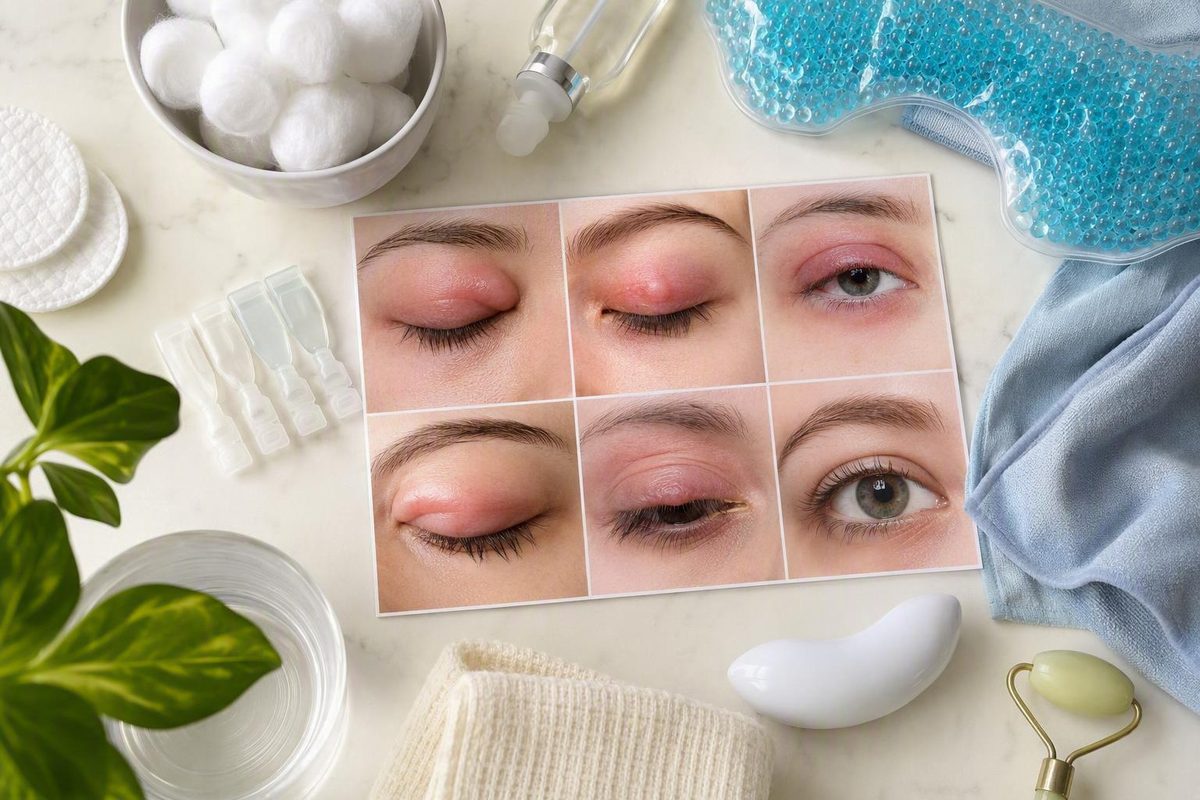
Eyelid swelling is a symptom, not a diagnosis. First check for loss of vision, double vision, eye bulging, severe or deep pain, painful or restricted eye movement, fever with marked swelling, rapidly spreading redness, breathing difficulty, and warning signs in a contact-lens wearer. Mild swelling without these features may be suitable for cautious, pattern-matched self-care, but appearance and symptoms alone cannot confirm the cause.
Start here: decide how urgently you need care
Choose the safest level of care
Emergency care now
Seek emergency assessment for:
- Loss of vision, a sudden substantial reduction in vision, or double vision
- An eyeball that appears pushed or displaced forward
- Severe or deep eye pain
- Pain or difficulty when moving the eye
- Fever with marked eyelid swelling
- Redness or swelling spreading rapidly around the eye or face
- Rapidly worsening symptoms
These features can occur with a dangerous infection around the eye. Orbital cellulitis, for example, may cause eye bulging, impaired movement, double or reduced vision, pain, and fever and requires immediate medical care (Merck Manual’s eyelid-swelling guidance).
Sudden swelling with hives, throat tightness, wheezing, or difficulty breathing may indicate a severe allergic reaction. Call emergency services rather than waiting for the swelling to settle.
Prompt or same-day assessment
Seek same-day clinical advice for a sudden vision change that is not already covered by the emergency signs above, eye pain that is not severe or deep, light sensitivity, or a very red eye. Also obtain prompt assessment for suspected infection, worsening pain, significant discharge with redness, swelling after an injury, or concerning symptoms in a contact-lens wearer.
Cautious self-care
Mild itching, puffiness, crusting, or a small uncomplicated eyelid lump may be monitored when vision is normal and there is no significant pain, fever, spreading redness, breathing problem, eye bulging, or difficulty moving the eye. Monitoring means watching for improvement rather than assigning a fixed deadline: seek care if the problem worsens, fails to begin settling, repeatedly returns, or develops any warning sign.
Swelling of the eyelid is different from bulging of the eyeball. A puffy lid may partly cover the eye. True bulging means the eyeball itself appears displaced forward and should be treated as an emergency warning sign.
The urgency levels above take priority over trying to identify a cause. Symptom patterns can help you choose a reasonable next step, but they cannot provide a reliable diagnosis at home.
Use the pattern—not swelling alone—to narrow the possibilities
Before choosing a compress or another form of care, note:
- When the swelling began and whether it is improving or worsening
- Whether one eyelid or both are affected
- Whether there is one distinct lump or widespread puffiness
- Whether the area is painful or tender
- Whether there is itching, burning, or grittiness
- Whether flakes or crusts are present around the eyelashes
- Whether discharge is watery, mucus-like, or thick
- Whether redness is spreading or fever is present
- Whether vision has changed
- Whether moving the eye is painful or difficult
| Pattern | Possible explanation | Typical accompanying clues | Appropriate next step |
|---|---|---|---|
| Tender bump at the eyelid edge | A pattern that may fit a stye | Local redness and pain; sometimes much of the lid becomes swollen | Use a comfortably warm compress if there are no warning signs; do not squeeze or drain the lump (stye and chalazion guidance) |
| Firm, relatively painless lump | A pattern that may fit a chalazion | Rounded lump, often away from the lash line; it may remain after earlier inflammation settles | Try comfortable warmth without forceful pressure; arrange an examination if it persists, recurs, or worsens |
| Itchy, diffuse swelling | Possible allergy or contact irritation | Relatively little pain, tearing, and a recent allergen or product exposure | Stop the suspected exposure and use a cool compress; seek care if swelling is marked, persistent, or associated with breathing symptoms (allergy-pattern guidance) |
| Crusted or flaky eyelid margins | A pattern that may fit blepharitis | Burning, grittiness, greasy-looking lids, or lashes stuck together on waking | Use gentle lid care if there are no warning signs; arrange assessment if symptoms persist or worsen (Cleveland Clinic’s blepharitis overview) |
| Red, swollen lid with discharge | Infection or noninfectious inflammation | Eye redness, soreness, light sensitivity, or blurred vision may occur | Obtain prompt assessment when infection is suspected, particularly with pain or contact-lens use (American Academy of Ophthalmology guidance) |
| Fever or spreading redness | Possible spreading infection, including cellulitis | Increasing warmth, tenderness, facial swelling, or feeling unwell | Seek urgent assessment; use emergency care if bulging, vision loss, double vision, deep pain, or painful eye movement occurs (MedlinePlus on orbital cellulitis) |
| Puffiness mainly on waking | Fluid pooling, allergy, or inflammation | Often affects both sides and may ease after becoming upright | Monitor if brief and mild; arrange assessment if persistent, marked, recurrent, or accompanied by swelling elsewhere |
A single localized area often fits a stye or chalazion pattern. Swelling across both eyelids can occur with allergy, blepharitis, fluid retention, medication reactions, or a systemic problem. These are not firm rules: a stye can make most of one lid look swollen, while an allergic or contact reaction can be more pronounced on one side.
The most useful initial distinction is therefore a localized lump versus diffuse swelling. A lump has a more clearly defined center. Diffuse swelling involves much of the lid and may extend into nearby facial tissue.
Localized bump: stye versus chalazion
A stye commonly appears as a tender or painful red swelling near the eyelid edge. It involves an inflamed eyelid gland and may involve infection. Although the bump is localized, surrounding inflammation can make much of the eyelid appear puffy.
A chalazion is generally firmer and less painful—or painless—and results from a blocked meibomian oil gland. It may sit farther from the eyelid edge. A lesion can begin red and painful, then leave a firmer, less tender lump after the inflammation subsides.
These are typical patterns rather than dependable at-home diagnoses. Other eyelid lesions can resemble a stye or chalazion, particularly when a lump persists, repeatedly returns, rapidly enlarges, or changes the eyelid’s contour.
For a small, uncomplicated lump without warning signs, place a clean, comfortably warm—not hot—compress over the closed eyelid. Warmth may soften material blocking a gland. Recommendations differ by condition, so there is no single temperature, session length, or frequency suitable for every eyelid lump.
Do not squeeze, pop, lance, or try to drain a stye or chalazion. Forceful manipulation can injure the eyelid or worsen inflammation. Arrange an examination if the lump is persistent, recurrent, increasingly painful, rapidly changing, or altering the shape of the lid. There is no universal recovery timeline because management depends on what the lesion actually is.
Diffuse swelling: allergy, blepharitis, irritation, or infection
Itching with relatively little pain can fit an allergic or contact-reaction pattern. Relevant exposures include pollen, pets, dust, mold, cosmetics, fragrances, skincare products, sunscreen, false lashes, and eyelash adhesive.
Blepharitis tends to affect the eyelid margins. Clues include recurring irritation or swelling, burning, grittiness, greasy-looking lids, and flakes or crusts around the eyelashes. It often affects both eyes, and the lids may stick together on waking. Blepharitis commonly follows a chronic or recurring course and is generally controlled rather than permanently cured.
Redness, soreness, discharge, and swollen lids can also occur with an eye infection. Neither discharge nor swelling alone reveals whether the cause is bacterial, viral, allergic, or noninfectious. Some infections are relatively minor, while those involving the cornea or deeper tissue around the eye need prompt treatment.
Before an appointment, review possible exposures and recent events:
- New eye makeup, facial products, sunscreen, or skincare
- Eyelash glue, false lashes, or lash treatments
- New or recently changed eye drops
- Contact-lens solution or other lens-care products
- Pollen, pets, dust, mold, or another possible allergen
- An insect bite, scratch, wound, or eye injury
- A recent sinus, dental, skin, or facial infection
Short-lived puffiness on waking can reflect overnight fluid pooling. Persistent, marked, or frequently recurring morning swelling deserves assessment, especially when both eyes are involved or swelling also affects the hands, legs, lips, or another part of the body.
Preseptal versus orbital cellulitis: why eye movement and vision matter
Preseptal cellulitis, also called periorbital cellulitis, affects the eyelid and surrounding skin in front of the eye socket. Vision, eye movement, and eye position are typically preserved. Even so, suspected preseptal cellulitis requires professional assessment and medical treatment rather than home monitoring alone.
Orbital cellulitis affects deeper tissue around the eye. It may cause:
- The eyeball to bulge forward
- Deep eye pain
- Painful, difficult, or restricted eye movement
- Double vision or reduced vision
- Fever
- Marked or rapidly worsening swelling
Normal-looking vision or apparently normal eye movement does not definitively exclude a serious infection. Do not use an at-home eye-movement check to decide that suspected cellulitis is safe to monitor.
Orbital cellulitis is a medical emergency. Evaluation may include CT or MRI, and treatment commonly requires hospitalization and intravenous antibiotics. Surgery may sometimes be needed to drain an abscess or relieve pressure (MedlinePlus diagnosis and treatment guidance).
Report any recent sinus, facial, dental, or skin infection, as well as an insect bite or wound near the eye. These details can help a clinician assess how an infection may have developed or spread.
Safe self-care: when to use warmth, cooling, or neither
| What the swelling resembles | Compress choice | Cautious approach |
|---|---|---|
| Stye, chalazion, blocked oil gland, or blepharitis | Comfortably warm | Rest on the closed lid without pressing hard |
| Mild allergic or irritant puffiness | Cool | Rest gently on the closed lid and avoid rubbing |
| Any swelling with the warning signs listed above | Neither as a substitute for care | Obtain the appropriate urgent or emergency assessment |
For a blepharitis-like pattern without warning signs:
- Wash and dry your hands.
- Rest a clean, comfortably warm compress on the closed eyelid.
- Use only light massage; do not squeeze a lump or press on the eyeball.
- Carefully wipe loosened debris along the eyelid margin with clean material.
- Stop if the routine increases pain, redness, swelling, or irritation.
Very hot compresses can burn delicate eyelid skin. Aggressive rubbing or massage may worsen irritation. A compress should feel comfortable rather than intensely hot, and it should not delay medical care when warning signs are present.
Temporarily avoid eye makeup during significant inflammation. Remove contact lenses and use glasses while an infection or substantial inflammation is possible.
Do not self-start leftover antibiotics, steroid eye drops, or another person’s medication. Steroid eye medicines can reduce defenses against serious infection and require professional supervision. If you suspect that a prescribed tablet, eye drop, or postoperative product is contributing to swelling, contact the prescriber, pharmacist, or eye-care professional rather than stopping it independently. Medicines, topical products, and contact-lens solutions can all be relevant exposures, but timing and appearance alone do not prove causation (clinical review of eyelid edema).
When persistent or recurring swelling needs an examination
Arrange a professional examination when swelling is:
- Persistent, recurrent, unexplained, or failing to begin improving
- Increasingly painful or rapidly changing
- Associated with a lump that repeatedly returns
- Changing the contour or shape of the eyelid
- Accompanied by continuing redness, discharge, or irritation
- Present after an eye injury or recent eye surgery
Contact-lens wearers need a lower threshold for care. Remove the lenses and obtain prompt eye-care assessment if swelling occurs with pain, marked redness, light sensitivity, discharge, or reduced vision. Contact-lens-associated corneal infection can progress quickly and threaten vision (American Academy of Ophthalmology guidance on eye infections).
These circumstances may change the appropriate evaluation and treatment.
Swelling in both eyelids without redness can sometimes be associated with allergy, medication effects, fluid retention, thyroid disease, kidney disease, or another systemic cause. Appearance alone cannot distinguish among these possibilities, so avoid attributing persistent bilateral swelling to a particular condition without an examination.
An evaluation may include questions about timing, recurrence, medicines, cosmetics, contact-lens use, injuries, allergies, and recent infections. A clinician may examine the eyelid and eye, test vision, and check eye movement and position. Imaging or laboratory tests may be appropriate when a deeper infection or systemic cause is suspected.
There is no single treatment or universal recovery timeline for eyelid swelling. Allergy, a blocked gland, blepharitis, corneal infection, and cellulitis require different responses.
Is eyelid swelling contagious?
Swelling itself is not contagious; contagiousness depends on the underlying cause. Some viral or bacterial infections that cause redness, discharge, and swollen lids can spread, however. A contact-lens wearer may have either noninfectious irritation or an infection, so contact-lens use alone does not determine contagiousness.
Until the cause is clearer, wash your hands before and after touching the eye area, avoid sharing towels or eye makeup, and do not share eye drops. Seek assessment when infection is suspected rather than using the appearance of discharge to decide whether the condition is contagious.
Can a medicine, eye drop, or contact-lens solution cause eyelid swelling?
Medicines, eye drops, and contact-lens solutions can be relevant when investigating eyelid swelling, but the responsible product cannot be identified from appearance alone. A clinician or pharmacist may need to review the timing of exposure, the ingredients, other symptoms, and alternative explanations.
Write down when each medicine or product was started, which eye was exposed, and how quickly the swelling developed. If possible, bring the bottle, packaging, or ingredient list to the appointment. Do not stop a prescribed tablet or eye drop without advice from the prescriber, pharmacist, or eye-care professional.
If swelling after a medicine or product occurs with hives, throat tightness, wheezing, or difficulty breathing, call emergency services.
Reserve gentle, cause-matched self-care for mild swelling without warning signs, and have persistent or recurring swelling examined because appearance alone cannot establish the cause.