
Gel Eye Drops: When Thicker Relief Makes Sense
Learn when gel eye drops may help dry eyes, how they compare with liquids and ointments, and what to check for preservatives, contacts and temporary blur.
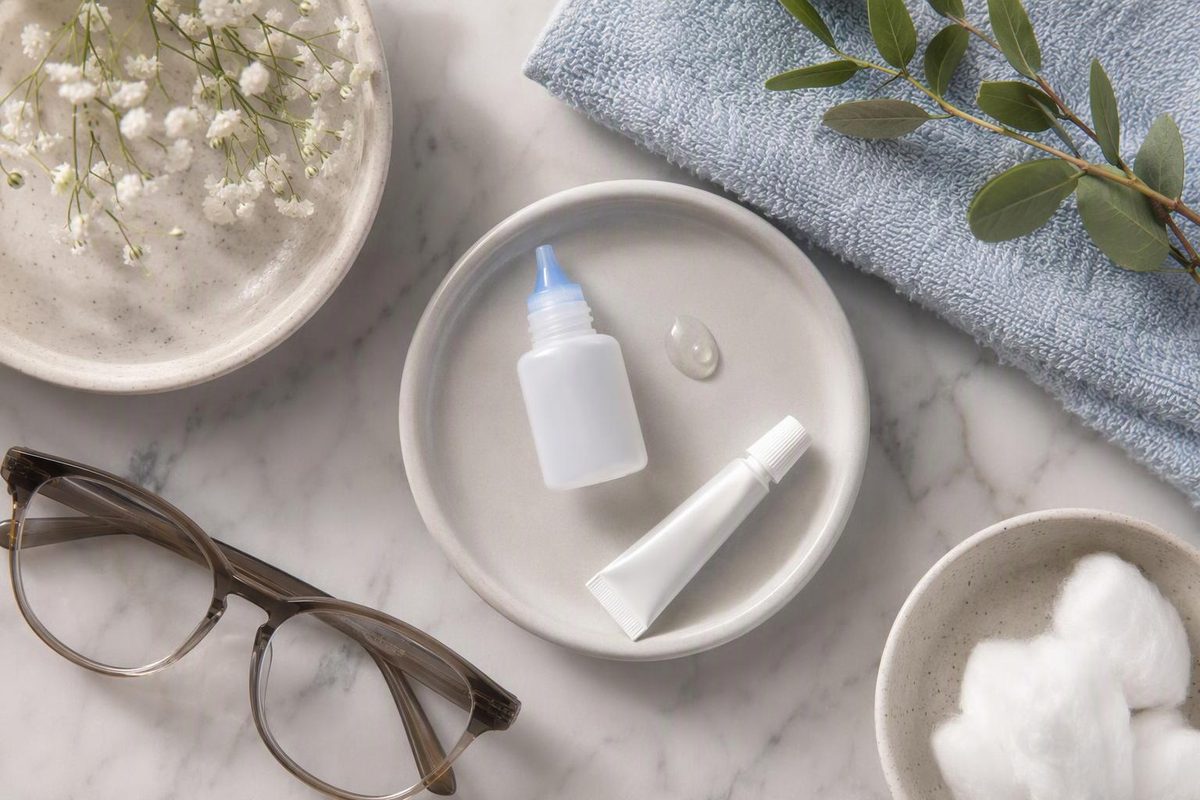
Gel eye drops are thicker artificial tears. They can be useful when ordinary liquid drops do not keep your eyes comfortable for long enough—especially in the evening or at bedtime. The trade-off is temporary blurred vision: thicker lubricants tend to stay on the eye longer, but can also blur vision more or for longer after use. The American Academy of Ophthalmology (AAO) generally favors thinner liquids for tasks requiring clear vision and gels or ointments for nighttime.
A gel is a way to relieve dryness symptoms, not a diagnosis or a treatment for every cause of burning eyes.
Gel drops, liquid tears or ointment?
Choose partly by what you need to do after using the lubricant:
| Type | When it may fit | Main trade-off |
|---|---|---|
| Thin liquid artificial tears | Working, reading or other daytime activities | May not provide relief for as long as a thicker lubricant |
| Gel eye drops | Evening relaxation or bedtime; times when temporary blur is manageable | More temporary blur than thinner drops |
| Lubricating eye ointment | Bedtime when a very thick lubricant is appropriate | Thickest option, with more or longer-lasting blur |
These are general differences, not a guarantee about any particular formula. The AAO explains that ointments are the thickest lubricant category and that no single brand works best for everyone. Do not drive until your vision is clear after using a gel.
For a broader comparison, see our guide to choosing eye drops for dry eyes.
What to check on the package
Look for “lubricant eye drops” or “lubricant eye gel,” rather than choosing a product just because it promises less redness. The AAO cautions against experimenting with redness-relief ingredients such as tetrahydrozoline and naphazoline, which can worsen symptoms and redness over time. Also check whether the exact gel contains preservatives: gel does not mean preservative-free. AAO guidance
Two U.S. examples illustrate that distinction; these are label comparisons, not a ranking. Details checked October 10, 2026:
| Product | Active lubricating ingredients | Preservative and handling distinction |
|---|---|---|
| Systane Gel Drops | Polyethylene glycol 400 0.4% and propylene glycol 0.3% | Contains POLYQUAD (polyquaternium-1) 0.001% preservative; shake well before use |
| Refresh Celluvisc | Carboxymethylcellulose sodium 1% | Preservative-free single-use vials; discard the vial after use, even if liquid remains |
Both labels direct users to instill one or two drops in the affected eye or eyes as needed. Follow the package you actually have, since similarly named products can have different instructions.
If you use lubricants more than four times daily over a long period, the AAO recommends preservative-free drops. Occasional use does not automatically require a preservative-free formula. Our preservative-free eye-drop guide explains the packaging choices. AAO guidance
Can you use gel drops with contacts?
Do not assume a gel is safe to put over contact lenses—even if it is preservative-free. The AAO advises choosing a preservative-free lubricant explicitly labeled for use while wearing lenses. Otherwise, remove your lenses first and follow the product-specific instructions for when you can reinsert them. If those instructions are unclear, ask your eye-care professional rather than guessing. AAO contact-lens guidance
If your main problem is dryness while wearing lenses, start with our guide to rewetting drops for contacts.
Use safely—and know when to stop self-treating
Wash your hands, pull down the lower eyelid to make a small pocket, and place the labeled number of drops there without touching the tip to your eye, eyelid or fingers. Close your eye gently afterward. If you use more than one type of eye drop, the National Eye Institute advises waiting at least five minutes between types; follow any more specific instructions from your clinician or product label.
Temporary blur immediately after a gel can be expected, but sudden vision changes, blur that does not clear, eye pain or light sensitivity need same-day eye-care attention, not another trial of drops. The AAO also advises calling promptly for significant redness or discharge.
The Systane Gel Drops and Refresh Celluvisc labels also say to stop use and ask a doctor for continued redness or irritation, or if the condition worsens or persists for more than 72 hours. That is not an instruction to wait 72 hours when symptoms worsen.
If you routinely rely on lubricants more than two or three times a day, the AAO recommends an eye examination: a thicker drop may extend comfort, but the underlying cause may need separate treatment.
This article is general information, not a diagnosis or a substitute for clinical care.